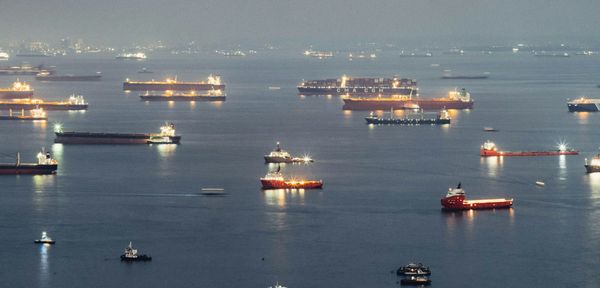
Export Contract Financing for U.S. Companies
Financely structures export contract financing for U.S. companies that need capital for materials, production, inventory and customer payment cycles.


Winning the Order Can Create the Next Financing Problem
A customer places a USD 25 million order. The exporter now has to purchase materials, pay suppliers, manufacture the product, carry inventory and arrange shipment before most of the contract value is collected.
The order can be profitable and the buyer can be credible. Neither fact puts cash into the exporter's operating account when supplier deposits become due.
Export contract financing provides capital against the execution of a confirmed international order. The facility can fund eligible costs before shipment and, where appropriate, continue financing the transaction after shipment through inventory or receivables finance.
Financely structures these facilities for established U.S. companies through banks, asset-based lenders, specialty finance providers and other institutional capital sources. Where the transaction qualifies, government credit support such as an EXIM working capital guarantee can form part of the structure.
Have a Large Export Contract to Execute?
Submit the contract value, production budget, buyer terms, required facility and current financial statements for review.
Request a QuoteThe Working-Capital Gap Between Contract and Payment
Export contracts can create a long period between the moment a company commits to perform and the moment it receives the majority of its cash.
A typical manufacturing cycle can look like this:
- Purchase order or commercial contract is signed.
- Supplier deposits become due.
- Raw materials and components are purchased.
- Manufacturing begins.
- Labor, engineering and overhead are incurred.
- Finished goods are completed and held for shipment.
- The product ships.
- The exporter issues the final invoice.
- Customer pays 30, 60, 90 or 120 days later.
The exporter needs capital through stages two to eight.
The longer the manufacturing cycle, the larger the potential funding requirement. A company building industrial machinery over seven months can have millions of dollars tied up in components, work in progress and labor before a finished asset exists.
A normal operating revolver may not have been sized for that temporary increase. Contract finance is designed to bridge the difference between the company's existing liquidity and the cash required to perform the order.
What Export Contract Financing Can Cover
The use of proceeds should follow the actual cash-conversion cycle rather than a generic percentage of the contract value.
Depending on the facility, financing can potentially cover:
- supplier deposits;
- raw materials;
- components;
- manufacturing costs;
- direct labor;
- work in progress;
- finished inventory;
- packaging;
- inspection;
- freight and logistics;
- certain export-related overhead;
- contract-specific standby LC requirements; and
- eligible accounts receivable after shipment.
Not every lender finances every cost.
One lender may be comfortable funding purchased components but give limited credit to work in progress. Another may finance work in progress if production is sufficiently advanced and independently verifiable. A specialist lender can be more flexible but price the additional execution risk accordingly.
Financely covers the broader mechanics in its pre-export financing solutions work for companies funding production before shipment.
Purchase Order Financing Is Only One Possible Structure
Companies often begin searching for "export PO finance" because the purchase order is the document that created the immediate cash requirement.
Sophisticated export transactions usually require a wider analysis.
Before deciding how to finance the contract, a capital provider needs answers to questions such as:
- Who issued the contract?
- Is the buyer creditworthy?
- Can the contract be cancelled?
- What conditions allow termination?
- What payment milestones exist?
- What happens if delivery is late?
- What gross margin remains after all execution costs?
- How much cash has to be deployed before the next customer payment?
- Who are the critical suppliers?
- Who controls materials and finished goods?
- Can inventory be independently verified?
- What event creates the receivable?
- Can the lender control customer collections?
- Which specific payment repays the loan?
The resulting structure may include PO finance, but it can just as easily become a combination of contract finance, inventory financing, asset-based lending and post-shipment receivables financing.
Companies researching purchase-order structures can compare this with Financely's purchase order financing for businesses with confirmed orders.
Example Export Contract Financing
| Exporter | U.S. machinery manufacturer |
| Contract Value | USD 32 million |
| Foreign Customer | Established mining company |
| Customer Deposit | 15% |
| Production Period | 7 months |
| Capital Required | USD 9 million |
| Gross Margin | 28% |
| Payment | Milestone payments plus final balance 45 days after delivery |
The customer's 15% deposit provides USD 4.8 million of initial contract cash, but that does not necessarily cover the production peak.
The manufacturer has to place orders for specialist components months before completion. Labor and engineering costs continue throughout production. Finished machines then remain on the balance sheet until inspection and shipment.
An illustrative structure could include:
- USD 9 million committed facility;
- advances against approved production costs;
- security over eligible inventory and receivables;
- controlled customer collection account;
- defined milestone reporting;
- customer payments used to reduce the facility balance; and
- availability declining as the contract reaches completion.
The lender's exposure changes during the contract.
At the beginning, it is exposed primarily to manufacturing and performance risk. Later, collateral consists of increasingly complete inventory. After shipment and acceptance, the principal asset becomes the customer's receivable.
The facility should be structured around that transition rather than pretending the lender owns the same risk from the first supplier deposit through final collection.
Pre-Shipment Export Finance
Pre-shipment finance provides capital before the finished goods leave the United States.
This is usually the highest-execution-risk portion of the financing because the exporter has not yet completed delivery and, in many cases, has not yet created an unconditional receivable.
The lender therefore underwrites manufacturing capacity, suppliers, production schedule, technical complexity, cost overruns, payment milestones and the borrower's own contribution.
The closer the product gets to completion, the more tangible collateral can become. That can allow the financing structure to evolve as production progresses.
Inventory Financing
Raw materials, work in progress and finished goods can form part of the collateral package where the lender considers them eligible.
Inventory eligibility depends on more than cost.
A lender can consider:
- location;
- ownership and title;
- stage of completion;
- specialization;
- alternative resale market;
- inspection rights;
- insurance;
- obsolescence risk; and
- whether the goods can be completed if the exporter fails.
Highly customized equipment built for one buyer can have less collateral value before completion than standardized goods with an active resale market. The contract can still be financeable, but the lender may require more equity or another form of credit support.
Receivables Financing After Shipment
The risk profile can improve materially after the exporter ships, the buyer accepts delivery and a valid invoice becomes payable.
The lender can then move from financing production primarily against inventory and corporate credit to financing the payment obligation of the foreign buyer.
Before shipment: capital funds suppliers, production and inventory.
After shipment: the receivable enters the collateral base if eligible.
At payment: buyer proceeds repay the facility.
A well-structured contract facility can therefore bridge the entire period from the first supplier payment through final customer collection without requiring the exporter to replace one financing source manually at each stage.
Borrowing-Base Facilities for Multiple Export Contracts
Transaction-specific financing is useful for a one-off large order. It becomes administratively inefficient when an exporter is executing several international contracts at the same time.
A larger company can instead use a revolving borrowing-base facility against a pool of eligible export assets.
The collateral base can change continuously as raw materials arrive, production advances, goods ship, invoices are issued and receivables are collected.
This is often more suitable for established exporters whose working-capital requirement is structural rather than tied to one exceptional contract.
EXIM-Supported Export Contract Financing
The Export-Import Bank of the United States can support qualifying working-capital facilities made by private lenders to U.S. exporters.
The commercial lender still makes the loan. EXIM provides a guarantee covering 90% of qualifying lender exposure under the Working Capital Loan Guarantee program.
The program can support both revolving facilities covering multiple export sales and transaction-specific facilities tied to an individual contract.
Eligible uses can include:
- inventory for export;
- purchased finished goods;
- direct and indirect contract costs;
- labor;
- overhead;
- design and engineering; and
- certain standby or commercial letters of credit associated with the export contract.
EXIM support can be particularly useful where a conventional lender likes the exporter and buyer but would otherwise provide insufficient credit against export-related inventory or foreign receivables.
The guarantee can improve lender appetite. It does not eliminate normal underwriting.
Financely reviews this alongside private-market alternatives rather than treating it as the only route. Exporters considering government-supported financing can review our U.S. EXIM financing program overview.
Financing Contracts Supported by Letters of Credit
An acceptable letter of credit can materially improve the post-shipment repayment structure.
The foreign buyer can provide a documentary letter of credit, confirmed documentary credit, standby letter of credit or advance-payment arrangement depending on the commercial agreement.
With a documentary LC, the exporter receives the benefit of a bank undertaking conditioned on presentation of compliant documents. A confirmed LC can further substitute the credit of the confirming bank for specified issuing-bank and country risks.
That can give the pre-shipment lender a clearer repayment path once the exporter performs.
The LC does not eliminate pre-shipment performance risk. Until goods are manufactured and complying documents are presented, the exporter still has to complete the contract. A lender financing raw materials seven months before shipment therefore continues to underwrite the exporter and production process.
Advance Payments Can Reduce the Required Facility
Customer deposits are one of the simplest sources of contract financing.
A 20% advance on a USD 25 million order provides USD 5 million before production. That can materially reduce the amount that has to be funded through debt.
Buyers frequently require an advance-payment guarantee before releasing that cash.
This creates another balance-sheet consideration. If the exporter's existing bank requires full cash collateral to issue the guarantee, the company can receive a USD 5 million customer advance while simultaneously tying up a similar amount of liquidity behind the bank instrument.
The financing structure therefore needs to consider advance payments, guarantee capacity and production funding together.
What Makes an Export Contract Financeable
The strongest transactions combine a credible operating company with a contract whose economics and payment mechanics can survive lender diligence.
Established Operating Exporter
The company should have an operating history consistent with the product it has agreed to supply. Historical revenue, manufacturing capacity and previous deliveries help the lender assess whether the contract represents manageable growth or an execution step-change the company may not be equipped to handle.
Credible Foreign Buyer
Buyer quality affects both contract reliability and the value of the resulting receivable.
The lender will want to verify the customer, its financial capacity, operating history and payment obligations.
Binding Commercial Contract
A preliminary expression of interest is not equivalent to an executed contract. Financing is stronger where price, quantity, specifications, delivery, acceptance and payment obligations are documented clearly.
Adequate Gross Margin
The contract needs enough margin to absorb financing costs, production overruns, freight, insurance and delays without erasing the exporter's equity cushion.
Reliable Suppliers
A manufacturer cannot complete a contract without the inputs needed to build the product. Lenders review key supplier quotations, lead times and dependencies where supplier failure could prevent delivery.
Defined Payment Milestones
Deposits and progress payments can materially reduce peak debt exposure. A contract requiring the exporter to finance 100% of a one-year manufacturing cycle until final acceptance places much more risk on the lender than a contract containing periodic progress payments.
Identifiable Repayment Source
The lender needs to know exactly which payment repays its facility and whether those proceeds can be directed into a controlled account rather than becoming unrestricted operating cash.
Transactions That Are Difficult to Finance
A large contract value cannot compensate for a transaction that lacks basic commercial substance.
Weak enquiries commonly involve:
- chains of brokers with no operational responsibility;
- companies with no history producing the contracted product;
- unverifiable foreign buyers;
- no firm supplier quotations;
- unrealistic gross margins;
- contracts that do not become effective unless financing is raised first;
- production schedules that cannot be substantiated;
- no identifiable source of repayment;
- no financial disclosure from the exporter; and
- requests for 100% financing where the lender requires a borrower contribution.
Contract finance works best when additional capital solves a clearly defined liquidity gap inside an otherwise executable transaction.
Contract Risk Matters as Much as Contract Value
A USD 50 million contract is not necessarily better collateral than a USD 5 million contract. Financeability depends on its terms and the parties responsible for payment.
Lenders review provisions including:
- buyer termination rights;
- liquidated damages;
- performance obligations;
- warranty exposure;
- advance-payment guarantees;
- performance bonds;
- delivery conditions;
- inspection requirements;
- acceptance testing;
- governing law;
- currency;
- force majeure;
- setoff rights; and
- dispute procedures.
Consider acceptance testing.
If the final 50% of a contract becomes payable only after the buyer certifies that complex equipment meets detailed performance standards, the lender has more exposure than it would under a contract requiring payment automatically upon presentation of specified shipping documents.
The financing model needs to account for the actual contractual payment trigger rather than assuming that shipment itself produces cash.
Contract Finance Should Be Sized Against Peak Cash Need
The contract face value is not the correct facility amount.
Financely builds a sources-and-uses and cash-conversion analysis to establish the maximum cumulative funding requirement during execution.
That analysis includes:
- supplier deposits;
- monthly production expenditure;
- labor and overhead;
- customer deposits;
- progress payments;
- existing cash available for the transaction;
- inventory conversion;
- shipment dates; and
- customer collection dates.
A USD 30 million contract can require only USD 6 million of peak external financing if milestone payments arrive throughout production.
Another USD 30 million contract can require USD 18 million if suppliers demand cash upfront and the buyer pays primarily after delivery. The signed contract value is identical. The financing requirement is completely different.
What Financely Does
Financely works on the exporter side to turn the commercial contract into a financing package that a lender can underwrite.
Our mandate can include:
- contract review from a financing perspective;
- cash-conversion analysis;
- sources-and-uses modeling;
- peak working-capital analysis;
- facility sizing;
- borrowing-base design;
- repayment and cash-control structuring;
- collateral analysis;
- information memorandum preparation;
- data-room preparation;
- lender identification and distribution;
- credit-enhancement analysis;
- EXIM structuring where applicable;
- indicative term-sheet comparison;
- lender due-diligence coordination;
- commercial and financing-document coordination; and
- support through closing.
Financely is not a lender. We provide paid structured-finance advisory and arrange financing on a best-efforts basis through appropriate banks, asset-based lenders, private credit and specialty finance providers.
Capital providers make their own credit decisions. Our role is to establish the financing structure before distribution, prepare the lender case and coordinate the transaction through underwriting.
Information Required to Review an Export Contract
For an initial financing review, we normally need:
- executed export contract or purchase order;
- foreign buyer information;
- supplier quotations;
- production schedule;
- detailed cost breakdown;
- gross margin calculation;
- customer payment milestones;
- historical financial statements;
- current management accounts;
- existing debt schedule;
- existing UCC and collateral position;
- requested facility amount;
- export destination;
- expected shipment dates; and
- details of any LC, guarantee, deposit or credit insurance supporting the contract.
The more complete the information, the easier it is to determine whether the requested facility matches the actual production and repayment cycle before the transaction reaches a lender's credit committee.
Export Contract Financing FAQ
Can a signed export contract be financed?
Yes, where the exporter, buyer, economics and contract terms support financing. A signed contract is evidence of a commercial order. The lender still underwrites the company's ability to perform, the costs required before shipment and the payment that will repay the facility.
Can financing cover supplier deposits?
Potentially. Supplier deposits can form part of eligible contract costs if the lender accepts the supplier, payment mechanics and production structure. Some lenders prefer to pay critical suppliers directly rather than advancing unrestricted cash to the exporter.
Can production costs be financed before shipment?
Yes. Pre-shipment export finance is specifically intended to fund eligible production requirements before delivery. Availability depends on the exporter's operating history, collateral, contract and lender underwriting.
Does the foreign buyer need to issue a letter of credit?
No. Export contracts can be financed on open-account terms, against milestone payments or through other structures. An acceptable LC can improve the repayment profile but is not required for every facility.
Can a contract be financed without an LC?
Yes. The lender can rely on the exporter's credit, inventory, receivables, buyer quality, credit insurance, controlled collections and other collateral. The absence of an LC simply changes the risk analysis.
What percentage of the contract value can be financed?
There is no universal percentage. Lenders size the facility against eligible costs, collateral, peak cash requirements, customer payments, gross margin and the exporter's own contribution. A company should request the capital required to execute the contract rather than assuming the loan will equal a fixed percentage of gross contract value.
Can the facility convert into receivables financing after shipment?
Yes. This is often an efficient structure. Before shipment, the lender finances eligible production and inventory. After shipment and invoicing, qualifying receivables replace part of the inventory collateral until the buyer pays.
Can EXIM support export contract financing?
Yes, for qualifying U.S. exporters and eligible export sales. EXIM's Working Capital Loan Guarantee can support both transaction-specific and revolving facilities provided by participating private lenders. Program eligibility, U.S. content and other requirements still apply.
Have a Large Export Contract to Execute?
If your company has a confirmed international order but needs additional capital to purchase materials, pay suppliers, manufacture goods or bridge the period between production and customer payment, Financely can assess the transaction.
We review the contract, production economics, repayment structure and existing balance sheet before determining which financing providers are appropriate.
Submit the executed order, contract value, working-capital requirement, buyer terms, production budget and financial statements. Where the transaction fits our mandate criteria, we can quote the advisory and capital-placement work required to take it to market.
Finance Your Export Contract
Tell us what you are manufacturing or exporting, who the buyer is, when customer payments occur and how much capital is required before shipment.
Request a QuoteFinancely provides paid corporate finance advisory, transaction structuring and capital placement services. Financely is not a bank, direct lender or government agency.
Export contract financing remains subject to independent lender underwriting, contract and buyer review, collateral eligibility, lien position, KYC, AML, sanctions review, production diligence and definitive financing documentation.
EXIM-supported transactions remain subject to the Export-Import Bank of the United States' current eligibility requirements and program rules. Government credit support does not guarantee that a private lender will approve a facility.
No financing outcome is guaranteed. This article is provided for general commercial information and does not constitute legal, tax, regulatory or investment advice.