
Structured Trade & Commodity Finance Advisory and Capital Placement
Financely structures and places capital for physical commodity transactions using borrowing bases, pre-export finance, inventory, offtake and LC-backed facilities.

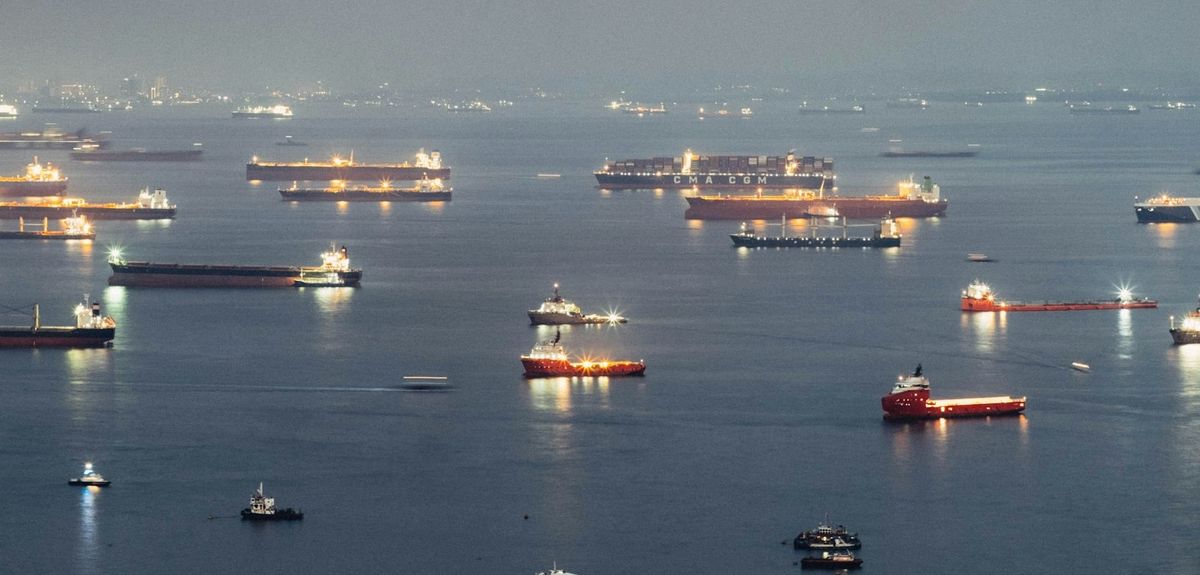
Finance Physical Commodity Transactions From Purchase to Collection
A physical commodity transaction can be commercially profitable and still fail because the trader cannot finance the period between paying the supplier and collecting from the buyer.
Financely provides paid structured trade and commodity finance advisory for traders, importers, exporters, producers and operating companies that need capital to execute identifiable physical trades.
We structure the transaction, determine the financeable collateral and repayment source, prepare the lender package and place the opportunity with banks, private credit funds, commodity finance lenders and specialty finance providers.
The mandate can cover the complete financing process from initial transaction review through term sheets, due diligence, lender documentation and financial close.
Need Capital for a Physical Commodity Deal?
Submit the commodity, purchase contract, buyer or offtake, transaction value, financing requirement, payment terms and expected trade cycle.
Request a QuoteWhat We Finance
Our work is focused on identifiable physical commodity transactions with real counterparties, real goods and a defined cash conversion cycle.
Transactions can involve:
- crude oil and refined petroleum products;
- copper, cobalt and other base metals;
- metal concentrates;
- gold and precious metals;
- agricultural commodities;
- sugar, grains and other soft commodities;
- fertilizers;
- polymers and petrochemicals;
- industrial raw materials;
- energy products;
- processed commodities; and
- other financeable physical goods with established markets.
Financely's broader structured trade and commodity finance coverage includes financing structures for importers, exporters, traders and commodity producers.
Financing Starts With the Transaction
Commodity finance lenders do not underwrite a margin percentage in isolation.
They underwrite the complete movement of goods, documents and money.
↓
Purchase Obligation
↓
Financing Advance
↓
Commodity Purchased
↓
Storage / Transit / Processing
↓
Delivery to Buyer
↓
Buyer Payment
↓
Lender Repayment
Each step creates a different risk.
The supplier must perform. Title must pass as expected. Goods must exist. Storage and transport arrangements must be legitimate. Insurance must protect the relevant exposures. The buyer must have a credible obligation to pay.
The financing structure is built around controlling those risks rather than simply lending money to a trading company and hoping the transaction closes.
Our Full-Scope Mandate
Financely can manage the financing workstream from the initial transaction review through capital placement.
| Stage | Financely Scope |
|---|---|
| Transaction Review | Review the commodity, counterparties, contracts, logistics, economics and financing gap. |
| Bankability | Identify the repayment source, collateral, lender controls and material transaction risks. |
| Structure | Determine whether the transaction fits prepayment, borrowing-base, inventory, receivables, LC-backed or another structure. |
| Credit Package | Prepare the lender-facing transaction summary, financial analysis, sources and uses and supporting documentation. |
| Capital Placement | Approach appropriate banks, private credit funds and specialty commodity finance providers. |
| Term Sheets | Compare advance rates, pricing, tenor, security, covenants and transaction controls. |
| Due Diligence | Coordinate lender information requests, KYT, contracts, logistics documentation and financial diligence. |
| Closing | Support the transaction through final approvals, conditions precedent and financing documentation. |
Prepayment Financing
Prepayment finance can be used where a lender advances money against future deliveries under a defined commodity supply arrangement.
The financing can be linked to the production, purchase or delivery of commodities and repaid from designated sales proceeds.
A lender can examine:
- producer or supplier capability;
- historical production;
- commodity price risk;
- offtake arrangements;
- delivery schedule;
- jurisdiction;
- export requirements;
- security;
- collection accounts; and
- the ability to redirect sales proceeds toward debt repayment.
Pre-Export Finance
Producers and exporters can require capital before the commodity has been shipped.
Funding can be required for extraction, processing, procurement, storage, transport or other costs required to turn a contracted sale into exportable goods.
The lender then expects repayment from export proceeds after delivery to the buyer.
For single-cargo transactions, Financely also provides pre-export finance facility setup for commodity exporters.
Borrowing-Base Facilities for Commodity Traders
Established commodity traders can require more than a single-transaction facility.
A borrowing-base revolver can finance a portfolio of eligible trade assets and increase or decrease availability as those assets change.
The borrowing base can incorporate:
- eligible inventory;
- goods in transit where permitted;
- warehouse-controlled commodities;
- accounts receivable;
- eligible contractual payment obligations; and
- other lender-approved trade assets.
Reserves and eligibility criteria reduce availability where the collateral carries concentration, price, location or documentation risk.
Financely has a dedicated service for borrowing-base financing for physical commodity traders that need revolving rather than one-off transaction capital.
Inventory Finance
Some transactions require the trader to own and hold the commodity before a buyer takes delivery.
Inventory financing can fund eligible goods while they remain in approved warehouses, terminals or other controlled locations.
Lenders can review:
- title;
- warehouse or terminal operator;
- inventory reports;
- inspection documents;
- insurance;
- commodity price volatility;
- hedging;
- liquidation value;
- existing liens; and
- the lender's ability to control release of the goods.
Offtake-Backed Financing
A credible buyer can materially improve the financeability of a commodity trade.
The buyer contract identifies who is expected to purchase the goods, when delivery occurs, how price is determined and when payment becomes due.
Lenders can then evaluate whether the expected buyer payment can form the primary repayment source.
This does not mean every signed offtake is bankable.
The lender will still examine:
- buyer credit quality;
- contract enforceability;
- conditions to payment;
- pricing formula;
- quality specifications;
- quantity tolerances;
- termination rights;
- setoff rights;
- assignment provisions; and
- whether proceeds can be controlled for lender repayment.
See our separate page on financing a signed commodity offtake agreement for transactions where buyer payment is central to the credit structure.
LC-Backed Commodity Finance
Documentary letters of credit can provide a defined bank payment undertaking after a complying presentation.
That can materially affect a commodity financier's analysis because the post-shipment repayment source may shift from open buyer credit to an issuing or confirming bank.
Financing can potentially be structured around the period before shipment, the period after compliant presentation or both.
Structures can involve:
- documentary LCs;
- confirmed LCs;
- usance LCs;
- UPAS structures;
- back-to-back letters of credit;
- transferable LCs;
- LC discounting; and
- LC sublimits within broader trade facilities.
The financing still depends on the issuing bank, LC wording, transaction economics and the lender's ability to obtain the required control over proceeds and documents.
Supplier Payment Financing
Many physical trades fail at the first cash requirement.
The supplier wants payment before releasing the commodity. The buyer pays only after shipment or delivery.
The trader therefore needs a facility capable of funding supplier payment while protecting the lender through control of the commodity and sales proceeds.
This can be structured transaction by transaction or through a revolving facility for established traders executing repeated purchases.
Bridge Finance for a Single Commodity Transaction
Some trades require short-duration capital for one identifiable purchase and resale rather than a permanent revolving credit facility.
The financing can cover a defined gap between supplier payment and buyer collection.
Single-transaction finance generally requires unusually clear control because the lender is relying heavily on the economics and execution of one trade.
Purchase contract, offtake, logistics, title, insurance, margin and repayment routing therefore become central underwriting items.
Example Commodity Finance Transaction
Assume an established commodity trader has a contract to purchase USD 20 million of refined product and an executed sale contract with an approved downstream buyer.
| Purchase Value | USD 20 million |
| Sale Value | USD 21.2 million |
| Trade Cycle | 45 days |
| Financing Requirement | USD 17 million |
| Trader Contribution | USD 3 million plus transaction costs |
| Primary Repayment | Controlled buyer proceeds |
The margin alone does not determine whether the lender will advance USD 17 million.
The credit case needs to establish that the supplier can perform, the commodity exists, the trader obtains clear title, insurance is appropriate, storage and logistics are legitimate and the downstream buyer has a credible payment obligation.
The lender can then structure payment directly to the supplier, obtain control over title documents, require approved storage or inspection and direct buyer proceeds into a controlled collection account.
The USD 17 million advance is repaid from the buyer's USD 21.2 million payment. Remaining proceeds are released according to the agreed waterfall.
What Lenders Underwrite
Commodity trade finance is transaction underwriting layered on top of borrower underwriting.
The Trader
Lenders review operating history, financial statements, liquidity, management, trade experience, existing debt and historical performance.
Supplier
The supplier needs to exist, control the goods it proposes to sell and have the operational ability to deliver the contracted quantity and specification.
Buyer
Buyer credit is important because the lender expects the sale proceeds to repay the facility.
Commodity
The lender assesses marketability, price volatility, quality specifications, liquidity and the consequences if the intended buyer fails to perform.
Logistics
Storage, ports, vessels, warehouses, inspection companies and transport arrangements can form part of the collateral-control framework.
Repayment
The lender needs a credible route from buyer payment to repayment of the facility rather than relying on the trader to receive unrestricted proceeds and voluntarily return the money later.
KYC and KYT Are Part of the Credit Process
Physical commodity transactions receive significant compliance scrutiny.
A commercially profitable trade can still be unacceptable if the counterparties, goods, route, vessel, banks or payment chain create sanctions, AML or transaction-integrity concerns.
Review can extend to:
- supplier;
- buyer;
- trader;
- beneficial owners;
- intermediaries;
- banks;
- vessels;
- ports;
- warehouses and terminals;
- inspection companies;
- origin and destination of goods; and
- source and destination of funds.
KYT should begin before lender distribution rather than after a financing institution discovers a material compliance problem.
Contract Quality Matters
A lender cannot finance a transaction effectively if the commercial documents leave basic obligations unresolved.
Purchase and sale contracts should address issues such as:
- commodity specification;
- quantity;
- price or pricing formula;
- delivery terms;
- Incoterm;
- inspection;
- title transfer;
- risk transfer;
- payment terms;
- quality claims;
- default;
- termination;
- assignment; and
- governing law and dispute provisions.
Financing terms are difficult to finalize when the borrower itself has not established when it owns the commodity or when its buyer becomes obligated to pay.
Trader Equity and First-Loss Capital
A lender may require the trader to fund part of the transaction from its own capital.
That contribution absorbs a portion of commodity price movements, operating costs and execution risk before the lender's principal is impaired.
The required contribution depends on the transaction, collateral, buyer, commodity and lender.
Traders seeking effectively 100% financing should be prepared to demonstrate why the transaction's collateral and contractual protections justify unusually high leverage.
Price Risk and Hedging
Commodity values can move significantly while the lender's capital is outstanding.
A trader buying at a fixed price and selling later at a floating market price can carry a materially different risk from a matched purchase and sale with back-to-back pricing.
The financing analysis can therefore consider:
- fixed versus floating pricing;
- pricing dates;
- benchmark exposure;
- basis risk;
- FX risk;
- hedging arrangements;
- margin requirements; and
- minimum collateral coverage.
Capital Placement
Once the transaction has been structured and packaged, Financely distributes it to institutions whose mandates fit the credit.
Depending on the transaction, potential capital providers can include:
- commercial banks;
- specialist commodity finance banks;
- private credit funds;
- trade finance funds;
- asset-based lenders;
- specialty finance companies;
- inventory financiers;
- receivables financiers;
- alternative lenders; and
- other institutional capital providers with relevant risk appetite.
Distribution is targeted. Sending an oil, metals or agricultural trade indiscriminately to hundreds of unrelated lenders does not improve bankability.
What the Lender Package Contains
Capital providers need enough information to assess the transaction without reconstructing it from an email chain.
Depending on the mandate, we can prepare:
- transaction summary;
- borrower profile;
- purchase and sale flow;
- sources and uses;
- cash conversion cycle;
- requested facility structure;
- collateral package;
- repayment waterfall;
- supplier profile;
- buyer profile;
- trade economics;
- historical financial analysis;
- risk and mitigant analysis;
- transaction timeline;
- KYC documentation index; and
- supporting contract and logistics documentation.
Information We Need to Review a Commodity Finance Mandate
An initial submission should normally include:
- commodity;
- transaction value;
- amount of financing required;
- purchase contract;
- sale or offtake contract;
- supplier information;
- buyer information;
- purchase price;
- sale price or pricing formula;
- payment terms;
- trade cycle;
- Incoterms;
- shipping route;
- storage arrangements;
- inspection arrangements;
- insurance;
- trader financial statements;
- amount of trader capital available;
- existing financing;
- requested closing date; and
- any LC, SBLC or bank payment instrument involved.
A lender cannot evaluate a transaction from an LOI containing only commodity, quantity and purported margin. The financing package needs to explain how the complete trade will execute.
Transactions We Generally Cannot Place
Institutional commodity finance requires verifiable transaction fundamentals.
We are unlikely to proceed where:
- the applicant is only one of several undisclosed brokers;
- the supplier cannot be independently verified;
- the buyer cannot be independently verified;
- there is no executable purchase contract;
- there is no identifiable repayment source;
- transaction economics are commercially implausible;
- storage, inspection or logistics documents cannot be authenticated;
- the transaction relies on unexplained SWIFT messages rather than commercial credit fundamentals;
- the applicant refuses KYC or KYT;
- funding depends on a supposed trading platform or monetization program;
- the transaction cannot pass sanctions or AML review; or
- the requested financing bears no reasonable relationship to the collateral and repayment structure.
Capital placement begins after a transaction is sufficiently developed to survive institutional underwriting.
Traders vs. Intermediaries
A physical commodity trader takes contractual and financial responsibility for a transaction.
A broker that introduces a buyer to a seller can perform a legitimate commercial function, but it does not automatically become the financeable borrower.
Lenders need to know which entity purchases the commodity, takes title, bears risk, invoices the buyer and receives the sale proceeds.
If the applicant has no contractual role beyond collecting a commission, the financing generally needs to be arranged with the actual principal rather than the intermediary.
Why a Signed Contract Is Not Enough
A signed contract establishes a commercial obligation.
It does not establish that a lender should fund the full purchase price.
The lender still needs to determine what happens if the seller fails, the buyer rejects the goods, commodity prices move, the vessel is delayed, inventory disappears or payment becomes disputed.
The job of structured trade finance is to identify those exposures and build a transaction in which lender repayment does not depend solely on everything proceeding exactly as forecast.
Revolving Facilities for Repeat Traders
An established trader executing similar transactions every month should not necessarily arrange a new loan for every cargo.
A revolving facility can allow repeated purchases within an approved credit framework.
The facility can establish:
- maximum commitment;
- eligible commodities;
- approved buyers;
- approved suppliers;
- eligible jurisdictions;
- advance rates;
- margin requirements;
- storage requirements;
- transaction concentration limits;
- borrowing-base reporting; and
- collection-account mechanics.
Once established, the trader can finance qualifying transactions inside the approved facility rather than starting credit underwriting from zero for every purchase.
What Financely Does
Financely acts as the borrower's structured trade finance advisor and capital placement firm.
Our mandate can include:
- transaction bankability review;
- commodity finance structure design;
- purchase and sale flow analysis;
- cash conversion analysis;
- borrowing-base design;
- inventory finance structuring;
- pre-export and prepayment structuring;
- LC and bank-instrument integration;
- supplier and buyer credit analysis;
- collateral and security analysis;
- repayment waterfall design;
- KYT preparation;
- lender-facing information memorandum;
- data-room preparation;
- bank and private credit identification;
- capital-provider distribution;
- term-sheet comparison;
- due-diligence coordination;
- financing-document coordination; and
- support through financial close.
Financely provides paid advisory and capital placement services. We are not a bank, direct lender or commodity principal. Financing is arranged on a best-efforts basis and remains subject to independent lender underwriting, KYC, KYT, sanctions review, collateral, documentation and final credit approval.
Structured Trade & Commodity Finance FAQ
Can Financely finance a single commodity transaction?
We can structure and place single-transaction financing where the purchase, sale, logistics, counterparties, economics and repayment source are sufficiently developed for institutional underwriting.
Can you finance a commodity trade against a signed offtake?
Potentially. The lender will examine the buyer, contractual payment obligation, supplier, transaction economics, collateral and ability to control the buyer proceeds.
Can the lender fund 100% of the commodity purchase?
That depends on the transaction. Many lenders require trader equity, margin or another form of first-loss capital. Advance rates depend on collateral, counterparties, transaction controls and lender appetite.
Can a startup commodity trader obtain financing?
It can be more difficult because the lender has limited operating history to underwrite. Strong contracts, experienced management, credible counterparties, meaningful sponsor capital and lender-controlled transaction mechanics can become particularly important.
Can a commodity broker obtain trade finance?
A broker that does not purchase, own or sell the commodity is generally not the natural borrower for transaction finance. The financeable party normally needs a contractual principal role and exposure to the underlying trade.
Can you arrange financing against a letter of credit?
Potentially. LC-backed pre-shipment, post-shipment and discounting structures depend on the issuing bank, documentary terms, beneficiary, trade economics and lender appetite.
Can commodity inventory support a revolving facility?
Yes. Eligible inventory can form part of a borrowing base where title, location, valuation, insurance, marketability and lender control satisfy the facility requirements.
Can you finance oil and refined petroleum products?
Potentially. Petroleum transactions require substantial scrutiny of counterparties, storage, vessels, title, inspection, sanctions exposure and payment mechanics.
Can you finance metals and concentrates?
Potentially. The lender will consider assay and inspection, title, logistics, offtake, pricing, jurisdiction and the ability to control goods and sale proceeds.
Does Financely guarantee funding?
No. Financely provides paid advisory and capital placement on a best-efforts basis. Banks and other capital providers independently decide whether to finance each transaction.
Need Capital to Execute a Commodity Transaction?
If you have an identifiable physical commodity transaction but need capital between supplier payment and buyer collection, submit the complete commercial structure for review.
We will assess the transaction, borrower, buyer, supplier, collateral, payment mechanism and financing gap before determining how it should be presented to capital providers.
The strongest submissions include executed purchase and sale contracts, corporate financials, transaction economics, logistics information and a clear explanation of how much capital is required and for how long.
Structure and Place Your Commodity Finance Facility
Send us the commodity, transaction value, financing requirement, supplier, buyer, payment terms and expected trade cycle.
Request a QuoteFinancely provides paid structured trade finance advisory, transaction structuring and capital placement services. Financely is not a bank, direct lender, commodity buyer or commodity seller.
Financing remains subject to independent lender underwriting, KYC, KYT, AML, sanctions review, counterparty verification, collateral eligibility, legal due diligence, transaction documentation and final credit approval.
Transaction structures and examples are illustrative. No advance rate, facility size, pricing, instrument issuance or financing outcome is guaranteed. This article is provided for general commercial information and does not constitute legal, tax or regulatory advice.


