
Data Center Private Credit Financing: A Strategic Capital Solution for Digital Infrastructure Growth

The artificial intelligence boom is driving massive demand for data centers. Building them eats up huge amounts of money, and traditional bank loans often just can't keep up.
Private credit lenders are now providing billions of dollars to finance data center construction and expansion. They offer flexible terms and move much faster than conventional banks.
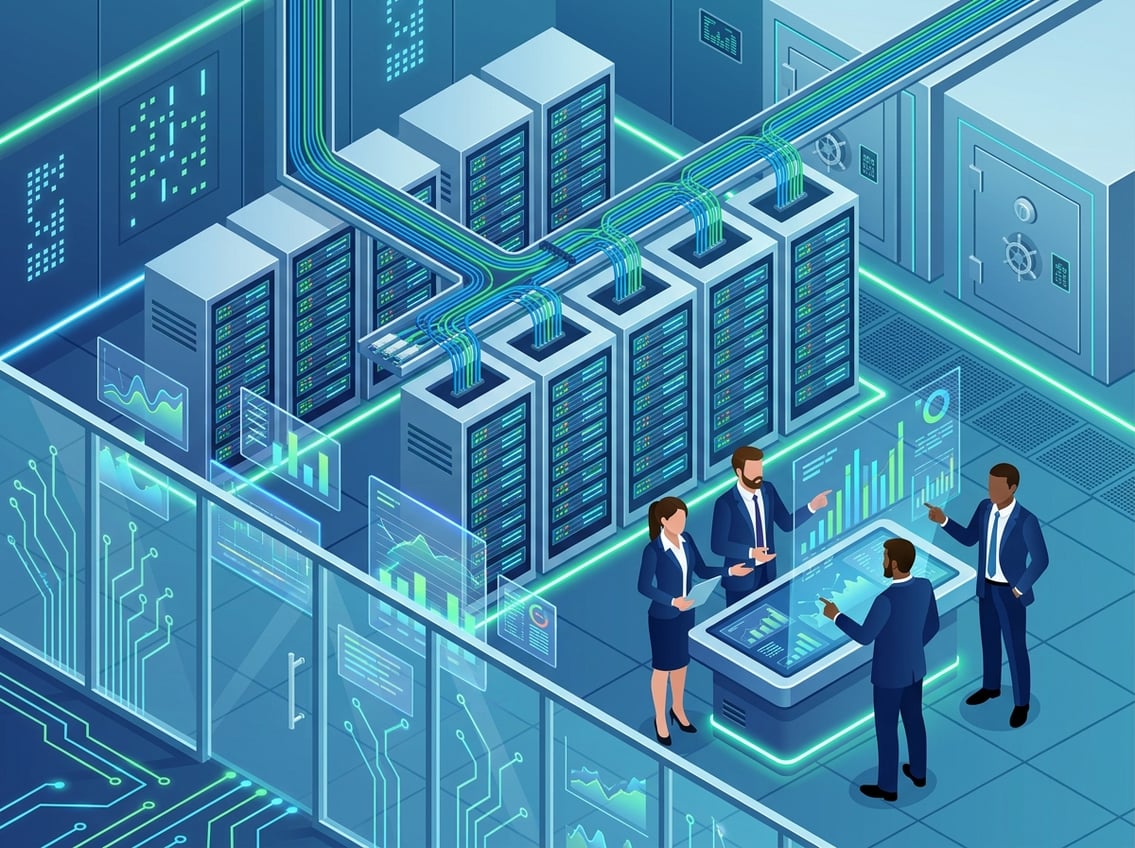
This shift in financing is changing how tech companies build AI infrastructure. Major players like Meta and Microsoft have landed deals worth tens of billions through private credit arrangements.
These partnerships let companies expand quickly without selling stock or waiting for banks to grind through approvals. It's a game-changer, honestly.
Private credit brings advantages for both sides in the data center space. Lenders get steady returns backed by real assets and long-term contracts.
Borrowers enjoy customized loan structures that fit their specific projects. If you're navigating this world, understanding how private credit works can make a real difference.
Key Takeaways
- Private credit has become a major funding source for data centers as traditional banks struggle to meet the massive capital demands of AI infrastructure
- Lenders and borrowers benefit from flexible loan structures, faster approvals, and terms customized to specific project requirements
- The data center financing market faces evolving challenges including cross-border complications, sustainability requirements, and the need for specialized risk analysis
Market Dynamics for Data Center Lending

Private credit has become a major funding source for data centers as demand grows. Traditional banks are struggling to meet these financing needs.
The market is expected to handle over $60 billion in U.S. data center financing by 2025. Private lenders are set to fill a projected $1.5 trillion funding gap through 2028.
Trends Driving Private Credit in the Data Center Sector
Private credit managers are now shifting focus to data center lending as corporate dealmaking slows. Firms like Apollo, KKR, and Brookfield are competing to provide capital for AI infrastructure and hyperscale facilities.
Returns on data center lending fall between project finance and real estate strategies. Investors see steady cash flows from lease income on stabilized facilities, which makes these assets attractive for the long haul.
Key financing structures include:
- Asset-backed loans tied to equipment and property
- Cash flow-based project financing
- Portfolio-level debt across multiple facilities
- Bridge financing for development phases
Banks with domain expertise still lend billions through credit facilities. But private credit now handles larger ticket sizes and more complex deals that banks can't fit on their balance sheets.
Impact of Digital Transformation on Financing Demand
Digital transformation is fueling intense demand for data center capacity. AI workloads need huge computing power, so hyperscale operators have to expand fast.
Microsoft struck a $30 billion partnership with BlackRock for AI data center development. xAI Corp raised $5 billion in syndicated debt—just for one project.
Society's march toward digitization means your financing needs keep growing. Cloud computing, streaming, AI apps—all of them need physical infrastructure behind the scenes.
The financing market has matured to meet this demand. Now you can tap bridge financing, project loans, portfolio financing, or debt capital markets depending on your stage and needs.
Key Players in Data Center Private Credit
Major private credit firms like Apollo, KKR, and Brookfield lead the market with deep pockets. They compete for data center deals alongside traditional infrastructure funds.
Institutional investors are allocating more capital to data center debt. Insurance companies see the sector as a way to generate steady returns and manage risk through secured lending.
Primary lender types:
- Private credit funds
- Insurance companies
- Specialized infrastructure lenders
- Large commercial banks with data center expertise
Banks still play a role, but mostly when they have deep technical knowledge and relationships. Regional and national banks offer credit facilities when they really understand the sector's operational needs.
The European market looks pretty similar, with a wide range of financing products available. Lenders structure deals based on asset quality, tenant creditworthiness, and operational track records—not some cookie-cutter formula.
Structuring Private Credit Solutions
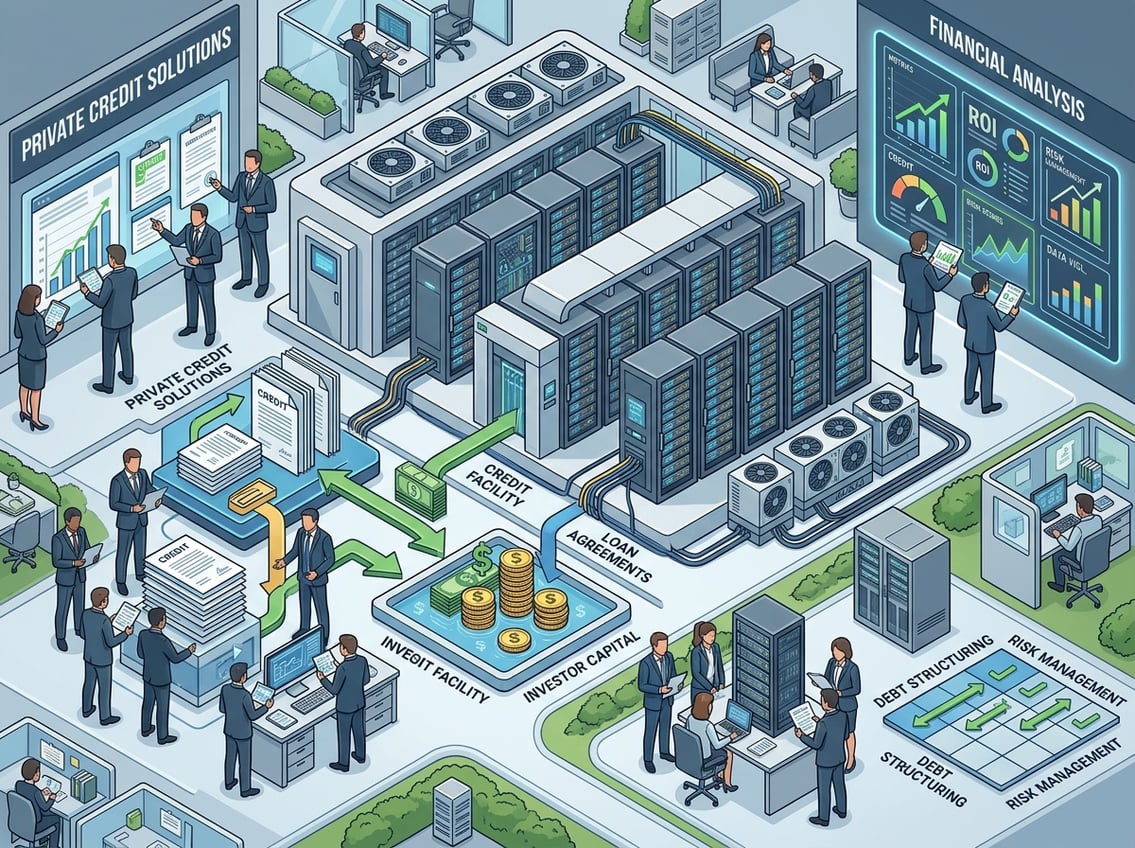
Private credit solutions for data centers need careful structuring to balance lender protection with borrower flexibility. Structures usually involve specialized loan products, comprehensive risk frameworks, and asset-backed security arrangements tailored for AI infrastructure investments.
Loan Types and Facility Structures
Asset-based finance is the most common structure for data center private credit deals. You can secure funding with term loans backed by physical infrastructure like servers, cooling, and buildings.
These loans usually range from $500 million to over $10 billion for hyperscale sites. That's not pocket change.
Special purpose vehicles (SPVs) offer another way to keep debt off your main balance sheet. You set up a dedicated entity to own and operate the data center, and lenders provide capital directly to the SPV.
This lets you expand capacity without adding direct debt to your books. Project finance structures work well for new developments, too.
You get funding based on projected cash flows from tenant agreements or colocation contracts. Lenders focus on revenue potential, not just your existing balance sheet, which helps you secure bigger facilities.
Cash-flow based lending is catching on for AI data centers. You pledge future revenue from cloud service providers or GPU rental deals as collateral. This structure matches the rapid growth in AI infrastructure demand.
Risk Assessment and Mitigation Strategies
Lenders worry a lot about technology getting outdated. You have to show clear upgrade paths and flexible infrastructure that can keep up with changing hardware.
AI-specific facilities get extra scrutiny because chip architectures change fast. Energy availability and cost are also huge concerns.
You need long-term power purchase agreements and reliable electricity access before most lenders will sign on. Projects without confirmed energy sources rarely get funded.
Tenant concentration risk is another biggie. If you depend on just one or two clients, lenders might impose stricter terms or higher interest rates.
A diversified tenant base with long-term contracts gets you better pricing. Credit managers set up covenant packages to monitor your metrics.
You’ll probably face quarterly reporting on utilization, revenue per rack, and operational efficiency. Early warning triggers let lenders step in before things go off the rails.
Collateralization and Security Considerations
Physical assets form the backbone of most data center loans. You pledge land, buildings, mechanical systems, and IT equipment as the main collateral.
Lenders do detailed appraisals to figure out what those assets are worth if things go south. Revenue assignments add another layer of security.
You give lenders first priority on customer payments and service contracts, so they have a steady repayment source even if operations hit a bump. Cross-collateralization links multiple facilities if you own a portfolio.
This spreads risk across properties, but if one site underperforms, it can affect your whole portfolio’s financing terms. Equipment financing lets you separate GPU and server purchases from real estate loans.
These are usually shorter-term—think 3-5 years—while building infrastructure loans run 7-10 years.
Due Diligence and Risk Analysis
Private credit lenders need to verify operator capabilities, review legal documents, and figure out realistic asset values before they commit capital to data center projects. Each part needs its own analysis to spot risks that could hurt loan performance.
Evaluating Operator Financial Health
You should look at the operator's balance sheet strength and cash flow history before funding a data center deal. Start by reviewing at least three years of audited financials to spot revenue trends, profit margins, and debt coverage.
Check out the operator's existing portfolio. How many facilities do they run? What are the occupancy and contract renewal rates?
Good operators usually show occupancy above 85% and customer retention over 90%. The management team's track record matters, too.
You want people who've actually delivered projects on time and on budget. Ask for references from previous lenders and big tenants.
Key financial metrics to verify:
- Debt-to-EBITDA ratio (ideally below 5x)
- Interest coverage ratio (minimum 2x)
- Liquidity position and cash reserves
- Backlog of signed customer contracts
Strong vendor relationships help avoid construction delays and cost overruns. That’s always a good sign for lenders.
Contractual and Legal Review
Your legal review has to cover tenant agreements, construction contracts, and property rights. Focus on tenant leases—they generate the cash flow that repays your loan.
Check lease terms for duration, escalation clauses, and early termination rights. Multi-year contracts with solid tenants give you the most stable repayment source.
Watch out for clauses that let tenants exit without penalty. Make sure the borrower has clear title or secure long-term ground leases.
Check for existing liens, easements, or restrictions that could mess with operations. You’ll want title insurance covering your loan amount.
Review all major contracts—power purchase agreements, fiber connectivity, equipment leases. These impact costs and service reliability.
Asset Valuation Approaches
Use a few valuation methods to cross-check the collateral value behind your loan. The income approach works best for operating data centers with established tenants.
Calculate net operating income from actual contracts, not just projections. Apply market cap rates based on recent deals for similar facilities nearby.
Cap rates for stabilized data centers usually run 6% to 9%. For development projects, the cost approach makes more sense.
Add land value to hard construction and soft costs like permits and design fees. Factor in a reasonable profit margin, but discount for lease-up risk.
Compare your valuation to recent sales of similar data centers. Adjust for differences in power, location, tenant credit, and age.
Comparison of Private Credit and Traditional Bank Financing
Private credit lenders usually close deals in 2-6 weeks and offer 9-18% interest rates. Banks take 2-4 months and charge 6-9%.
The two sources differ a lot in their covenant structures and operational requirements.
Speed and Flexibility in Funding
Private credit funds can approve and fund your data center project in 2-6 weeks. Banks, on the other hand, need 2-4 months for the same process.
This speed comes from how each lender makes decisions. Private credit funds have fewer approval layers and can customize loan terms fast.
Banks follow stricter underwriting standards and need multiple committee sign-offs. You’ll find more flexibility in deal structure with private credit.
These lenders will create custom financing packages that fit your project's quirks. They're open to deals that banks just won't touch.
Banks do offer lower interest rates—typically 6-9%, compared to private credit's 9-18%. But if you wait for bank approval, you might miss a critical project window.
When speed matters more than cost, private credit just makes sense.
Covenant and Reporting Differences
Private credit lenders usually offer lighter covenant packages than banks. You'll face fewer financial maintenance requirements and fewer operational restrictions.
Banks tend to impose tighter covenants, requiring you to keep specific debt-to-equity ratios, interest coverage levels, and other financial metrics. If you miss these targets, they can trigger default provisions.
Private credit agreements focus more on asset performance and project milestones than on corporate-level financial ratios. Your reporting burden is often simpler with private credit.
Banks want detailed quarterly financial statements, compliance certificates, and a pile of documentation. Private credit lenders might accept less frequent reporting centered on project-specific metrics.
This flexibility also shows up when covenants get violated. Private credit funds are more likely to negotiate waivers or amendments if you hit temporary performance bumps.
Real Estate Considerations in Data Centers
Data center financing means you have to carefully evaluate property structures and location factors. These directly impact whether your project is viable and how much you can earn.
The choice between leasing and owning changes your capital requirements and operational flexibility. Site selection brings its own headaches, like zoning rules and infrastructure needs.
Lease Versus Ownership Structures
Your financing approach changes a lot depending on whether you lease or own the data center property. If you own the facility, you get full control and capture long-term appreciation.
But you also face higher upfront capital requirements and take on all the maintenance headaches. Leased structures reduce your initial investment and shift property-level risks to landlords.
This approach makes sense if you need to keep capital free for equipment and tech upgrades. You do give up equity buildup, and you might run into restrictions on making modifications or expansions.
The return profile for data center lending often relies on lease income from stabilized facilities. That makes the lease structure a big factor in how lenders see your creditworthiness.
Long-term lease agreements with creditworthy tenants can boost your financing position. Shorter leases may force you to pony up higher equity contributions or reserves.
Site Selection and Zoning Risks
Your site selection has a direct impact on project feasibility and financing costs. Data centers need a lot of power capacity, fiber connectivity, and cooling infrastructure, which narrows down viable locations.
You need to verify utility availability before you commit to a site. Power constraints can slow down or even kill a project.
Zoning regulations are all over the map and affect what you can actually build. Some places restrict data center development because of power grid worries or noise from cooling systems.
You should run a thorough zoning analysis early so you don't get hit with costly delays. Regulatory and timing risks stick with you throughout development.
Lenders will look closely at permitting timelines and local government relationships. Sites with existing data center-friendly zoning and available utility capacity usually get higher valuations in the financing market.
Growth Financing for Data Center Expansion
Private credit has really become a go-to funding source for data center operators who want to scale up. The market is expected to bridge over $1 trillion in financing needs through 2028.
Lenders now offer flexible capital structures for both new builds and upgrades on existing facilities.
Funding for Greenfield Developments
Greenfield data center projects need a ton of upfront capital—anywhere from $500 million to several billion dollars for the big ones. Private credit lenders step in with construction financing that covers land, infrastructure, and equipment.
These loans usually come with interest-only periods while you're building, then switch to amortization once the facility is up and running.
Key financing components include:
- Development loans with 60-75% loan-to-cost ratios
- Forward commitment structures to lock in permanent financing terms
- Milestone-based funding tied to construction progress
Your greenfield financing plan should factor in utility infrastructure costs, which can add 20-30% to your total budget. Private credit funds are especially active here because banks often can't handle deals over $1 billion.
Upgrade and Retrofit Financing
Existing data centers need capital to boost power density, add liquid cooling, and upgrade electrical systems for AI workloads. Private credit can provide expansion financing without forcing you to refinance the whole facility.
These loans usually range from $50 million to $500 million, depending on the scope of upgrades.
Common upgrade projects include:
- Power capacity expansions from 10-20 MW to 50+ MW
- Cooling system retrofits for high-density GPU clusters
- Backup power and redundancy improvements
You can get retrofit financing approved faster than greenfield projects since the asset is already operational. Lenders generally offer terms of 3-7 years, with the option to refinance into longer-term debt once upgrades are finished and generating revenue.
Sustainability and ESG in Credit Underwriting
Lenders now bake environmental, social, and governance factors right into their credit assessments for data center financing. Energy consumption metrics and carbon footprint analysis are pretty much standard for loan approvals.
Energy Efficiency Standards
Your data center's power usage effectiveness (PUE) ratio is a primary benchmark in credit evaluations. Lenders usually prefer facilities with PUE ratings below 1.5, since those show better operational efficiency and lower long-term costs.
Many credit facilities now include sustainability-linked provisions that adjust interest rates if you hit certain energy targets.
Underwriters will check your cooling systems, server utilization rates, and renewable energy commitments. Facilities with advanced cooling tech like liquid cooling or outside air economization get more favorable terms.
Your electrical infrastructure's ability to support high-density computing while staying efficient also matters. Banks are starting to require third-party verification of your energy performance claims.
You'll need to provide documented baseline measurements and realistic improvement timelines. Some lenders offer rate reductions of 5-10 basis points if you meet efficiency milestones.
Evaluating Environmental Impact
Credit underwriters look at your water consumption, waste management, and carbon emissions reporting. Data centers in water-stressed regions face extra scrutiny about cooling water usage and recycling.
You must show how your facility handles electronic waste and follows circular economy principles. Your climate risk assessment should address both physical and transition risks.
Lenders want to know how extreme weather could affect your operations and what adaptation steps you've taken. They'll also check your exposure to carbon pricing and changing environmental regulations.
Many lenders now require Scope 1, 2, and 3 emissions disclosure as part of the underwriting. Your renewable energy procurement strategy directly impacts loan pricing and availability.
Facilities with long-term renewable power purchase agreements usually get better financing terms than those relying only on grid electricity.
Cross-Border and International Financing Challenges
Data center private credit deals that cross borders come with their own set of complications—currency swings and a patchwork of regulations. You'll need to manage both financial exposure and compliance complexity when you structure international transactions.
Currency and Political Risk Factors
Currency volatility can really mess with your returns if you're financing data centers in foreign markets. Exchange rate shifts between origination and repayment can eat into yields or jack up borrowing costs by 10-20% in emerging markets.
Key currency risks include:
- Revenue in local currency while debt is in USD or EUR
- Hedging costs that cut net returns by 2-4% per year
- Limited long-term currency hedges (rarely more than 5-7 years)
Political instability adds more risk in cross-border deals. Policy changes about data sovereignty, foreign ownership, or capital controls can block you from moving funds.
Some countries slap unexpected taxes on digital infrastructure or force you into local partnerships that change your control. Sovereign risk ratings matter for pricing, too.
You’ll often see interest rate premiums of 300-500 basis points in countries with BB credit ratings compared to AAA-rated places.
Local Regulatory Compliance
Each country has its own rules for data infrastructure financing. You'll have to navigate building codes, environmental standards, and financial regulations that can be wildly different.
Critical compliance areas:
- Lending licenses: Some countries require foreign lenders to get local approval
- Data localization laws: Regulations may require on-shore data storage, affecting facility design
- Tax treaties: Double taxation agreements determine withholding rates on interest payments
Legal documentation gets more complicated in cross-border deals. You'll need local counsel in each country to make sure your security interests and collateral arrangements are enforceable.
Bankruptcy and foreclosure rules can vary a lot. Some places offer weak creditor protections, increasing your risk.
Transfer pricing rules affect deals involving related-party loans across borders. You'll need to structure intercompany loans at arm's length rates to avoid trouble with tax authorities.
Emerging Trends Shaping the Future of Data Center Financing
Edge computing facilities need different financing structures from traditional data centers. AI-powered tools are also starting to change how lenders look at credit risk for these projects.
Demand for Edge Computing Infrastructure
Edge computing facilities are smaller and closer to end users. That creates new challenges for private credit lenders used to financing big, centralized data centers.
Edge sites usually cost between $2-10 million each, compared to $100 million or more for hyperscale centers. Lenders are starting to structure financing packages that cover multiple edge locations at once instead of just one facility.
Key financing differences for edge infrastructure:
- Shorter build timelines (6-12 months vs 18-36 months)
- Lower individual facility costs but more total sites
- Different power needs (usually 1-5 MW per site)
- More attention to local market conditions
Private credit providers are rolling out portfolio-based lending approaches. These let you finance 10-50 edge locations under a single credit facility, cutting transaction costs and speeding up deployment.
Integration of Artificial Intelligence in Credit Assessment
AI tools can now analyze data center credit applications in hours instead of weeks. Lenders use machine learning models to assess power availability, location risk, and tenant creditworthiness all at once.
Your financing terms are starting to depend on AI-generated risk scores that consider things like regional power grid stability and cooling efficiency. These models crunch utility data, weather patterns, and historical performance across thousands of facilities.
Common AI assessment factors:
- Real-time PUE monitoring
- Predictive maintenance cost modeling
- Tenant occupancy probability scores
- Regional demand forecasting
Lenders can now offer dynamic interest rates that adjust based on your facility's actual performance. That opens up chances for you to lock in better terms by showing strong operational efficiency with real data.
Frequently Asked Questions
Private credit financing for data centers comes with its own structures, risk assessments, and market quirks. Knowing these details helps you figure out if private credit is a good fit for your project.
How are large-scale data center projects typically financed across the capital stack?
Large-scale data center projects usually use a layered financing approach. The capital stack often has senior debt at 50-60% of total project costs, mezzanine debt or preferred equity at 10-20%, and common equity covering the last 20-40%.
Senior lenders get the first claim on assets and cash flows. They offer the lowest interest rates but expect strict covenants on operations and financial performance.
Mezzanine lenders take on more risk for higher returns, usually 10-15% annually. They often get equity participation rights or warrants as extra compensation.
Equity investors at the base of the stack take the most risk but get control over big decisions. They target returns of 15-25% or more, depending on the project's risk profile.
What makes private credit attractive compared with bank loans for financing data center developments?
Private credit lenders often offer more flexible terms than traditional banks. You can negotiate customized loan structures that actually fit your project timeline and cash flow, instead of squeezing into a bank’s one-size-fits-all product.
Speed is a huge advantage here. Private credit funds can wrap up due diligence and close deals in 30-60 days.
Bank syndicates, on the other hand, might stretch that out to 90-120 days or more. That’s a long wait if you’re trying to move fast.
Private lenders are also willing to take on higher leverage. You might lock in 65-70% loan-to-cost ratios from private credit, while banks usually stop at 50-60%.
They’re more open to financing the development and lease-up phases too. Banks generally want stabilized assets with long-term tenants already locked in.
Private credit funds deal with fewer regulatory headaches. They can provide larger single-lender commitments without the syndication rules and capital requirements that banks have to follow.
What underwriting metrics and diligence items do private lenders prioritize in data center deals?
Private lenders care a lot about customer creditworthiness and lease terms. They’ll dig into your anchor tenants’ financial strength, looking at credit ratings, revenue stability, and payment history.
Lease duration and structure matter. Lenders prefer 5-10 year leases from investment-grade customers, with as few early termination rights as possible.
Power density and utilization rates get close attention. Lenders want to see if your facility design fits current demand—usually 5-15 kilowatts per rack for traditional colocation, and 30-100+ kilowatts for AI workloads.
Location fundamentals can really affect lending terms. Private credit providers look at fiber connectivity, proximity to network hubs, disaster risk, and how reliable the local utility is.
Development experience makes a difference, especially for construction-phase financing. Lenders review your team’s track record, past projects, cost overruns, and delivery timelines.
Financial covenants often include debt service coverage ratios of 1.25-1.40x and loan-to-value limits. You’ll also need to keep minimum liquidity reserves for operating expenses and debt service.
How do power availability, interconnection, and long-term energy contracts affect credit risk in data center financing?
Power availability is pretty much the biggest factor in data center credit analysis. If your facility doesn’t have reliable, sufficient electrical capacity, you’re not getting a loan.
Lenders want to see proof of reserved power capacity before they’ll fund construction loans. You’ll need documentation showing the local utility can deliver your required load—sometimes 10-50+ megawatts for enterprise facilities.
Interconnection timing is a real risk point. Utility connection delays can drag out for 18-36 months in tight markets, which pushes back revenue and debt service payments.
Long-term power purchase agreements help reduce financing costs. If you’ve got fixed-price energy contracts for 5-10 years, you can take commodity price risk off the table and make cash flows more predictable.
Private credit providers usually require backup power plans. That means redundant utility feeds, on-site generation, or both if you want to hit that 99.99% uptime commitment.
Energy efficiency metrics can sway loan terms too. Lower power usage effectiveness ratios—ideally below 1.3—keep operating costs down and improve debt coverage.
How do private credit funds source capital and manage liquidity risk in long-dated infrastructure-like loans?
Private credit funds mostly raise capital from institutional investors. Pension funds, insurance companies, endowments, and sovereign wealth funds put up billions, chasing higher yields than public bonds offer.
These funds generally use closed-end structures with 7-10 year investment periods. Investors commit capital upfront, but funds draw it down as deals close, which helps match capital deployment to lending activity.
Fund managers charge annual management fees of 1-2% on committed capital. They also take performance fees of 15-20% on returns above certain hurdle rates.
Liquidity management takes careful planning. Data center loans often last 5-7 years, so funds keep capital reserves for follow-on investments and unexpected events instead of deploying everything right away.
Some funds use subscription credit facilities from banks. These lines help bridge timing gaps between capital calls and deal closings, which means they don’t have to rush investor funding requests.
Loan sales and syndications offer exit flexibility. If a fund needs liquidity, it can sell loan participations to other credit funds or institutional buyers in the secondary market.
Some newer funds are even trying out asset-backed securities structures. Pooling multiple data center loans into securitization vehicles could open up more liquidity options and maybe lower overall capital costs.
What key lessons from the 2008 credit cycle are most relevant to today's private credit market?
Concentration risk proved devastating during the 2008 crisis. Lenders who leaned too heavily into single sectors or geographies got hammered when those markets tanked.
Private credit funds today use broader diversification requirements. Most limit single-borrower exposure to 5-10% of fund assets, and sector concentrations usually top out at 20-30%.
Underwriting discipline really slipped in 2005-2007. Lenders relaxed standards, bought into overly rosy projections, and basically ignored warning signs just to win deals.
The big takeaway? Stick to consistent credit standards, no matter how fierce the competition gets. Always check tenant creditworthiness, verify revenue projections, and stress-test your assumptions—even if everyone else seems optimistic.
Liquidity mismatches triggered a lot of failures during the crisis. Lenders funded long-term assets with short-term debt, which forced painful fire sales when refinancing options vanished.
Private credit funds now pay closer attention to matching capital duration with asset duration. Closed-end fund structures help prevent the redemption runs that wrecked open-end real estate funds in 2008.


