
Transportation and Equipment Private Credit Financing: A Strategic Capital Solution for Asset-Heavy Industries

Transportation and equipment financing usually demands lending solutions that most banks just don't have. Private credit financing for transportation and equipment lets businesses get vehicles, machinery, and other essential assets through non-bank lenders who actually understand the industry and can act faster than big financial institutions.
This type of financing covers everything from semi-trucks and construction gear to entire commercial fleets.
Maybe you're curious how private credit actually differs from a standard equipment loan. Private credit lenders use their own money and make decisions quickly, often helping businesses with unique needs or situations where flexible terms matter.
They can finance brand-new or used equipment, whether you’re buying from a dealer, a private seller, or even at an auction. Loan amounts can range from a few thousand bucks to several million.
The transportation and equipment private credit market keeps growing. Specialized lenders evaluate your specific situation and set up payment structures that actually match your cash flow cycles.
Key Takeaways
- Private credit financing usually gets you faster, more flexible funding for transportation and equipment than banks do.
- Lenders build deals around your industry and can finance assets from dealers, private sellers, or auctions.
- Understanding risk, asset types, and market trends helps you get better terms and protect your cash flow.
Key Lending Structures
Transportation and equipment financing comes with a few unique structures. How the money moves, how risk is shared, and how assets are used as collateral all depend on the structure you pick.
The three big ones—secured versus unsecured loans, leasing arrangements, and syndicated versus bilateral facilities—each have their own strengths depending on your company’s financial situation and what you need.
Secured Versus Unsecured Loans
Secured loans pretty much run the show in transportation and equipment financing. The physical assets themselves serve as collateral.
If you finance a fleet of trucks or some manufacturing equipment, lenders take a security interest through UCC filings. This gives them the legal right to repossess the gear if you default.
This setup lowers the lender's risk and usually leads to lower interest rates for you. Interest rates on secured equipment loans typically run 200 to 400 basis points lower than unsecured ones.
You'll also get higher loan-to-value ratios, sometimes up to 80-90% of the equipment's appraised value. Unsecured loans, on the other hand, require a stronger balance sheet and a solid credit history.
Private credit lenders sometimes offer unsecured loans to companies with strong cash flow and very little debt. These loans come with higher rates but don’t tie up your assets as collateral for future borrowing.
Choosing between secured and unsecured financing affects your flexibility. Secured loans can restrict your ability to sell or transfer equipment without approval, while unsecured loans keep you flexible but cost more.
Leasing and Sale-Leaseback Arrangements
Operating leases let you use equipment without actually owning it. Most of the time, you keep the assets off your balance sheet under ASC 842 accounting standards.
You make regular lease payments, but the lessor keeps ownership and takes on the risk of what the equipment will be worth later. This structure lets you save your capital for other needs and makes it easier to upgrade your equipment when the lease is up.
Terminal Rental Adjustment Clause (TRAC) leases show up a lot in commercial vehicle financing. These leases adjust at the end based on the vehicle’s actual resale value compared to the predicted value.
You take on some risk if the value drops, but you get lower monthly payments. Sale-leaseback deals are another option.
You sell your existing equipment to a private credit lender and lease it back right away. This gives you fast cash from assets you already own and lets you keep using them.
Key differences between leasing structures:
- Operating Lease: Off-balance sheet, no ownership, predictable payments.
- TRAC Lease: Residual value adjustment, lower payments, shared risk.
- Sale-Leaseback: Immediate liquidity, continued use, long-term commitment.
Syndicated versus Bilateral Facilities
Bilateral facilities mean you negotiate directly with a single private credit lender. You only deal with one counterparty, which speeds things up and allows for customized terms.
This structure works well for equipment purchases under $50 million and for companies wanting confidential financing. Syndicated facilities pull together multiple lenders to fund bigger deals.
A lead arranger structures the deal and brings in participant lenders, each funding a piece of the total. Your company can access bigger pools of capital—sometimes over $100 million—which is handy for fleet-wide acquisitions or major upgrades.
Syndications take longer—usually 6-8 weeks, compared to 3-4 weeks for bilateral deals. You’ll negotiate with the lead arranger, but the other lenders have to approve big changes, which adds some complexity.
Still, this reduces concentration risk for everyone involved. Some lenders now offer hybrid structures—start with a bilateral deal and syndicate parts of it later.
That way, you get a fast close but can optimize your lender relationships as you grow.
Types of Transportation Assets
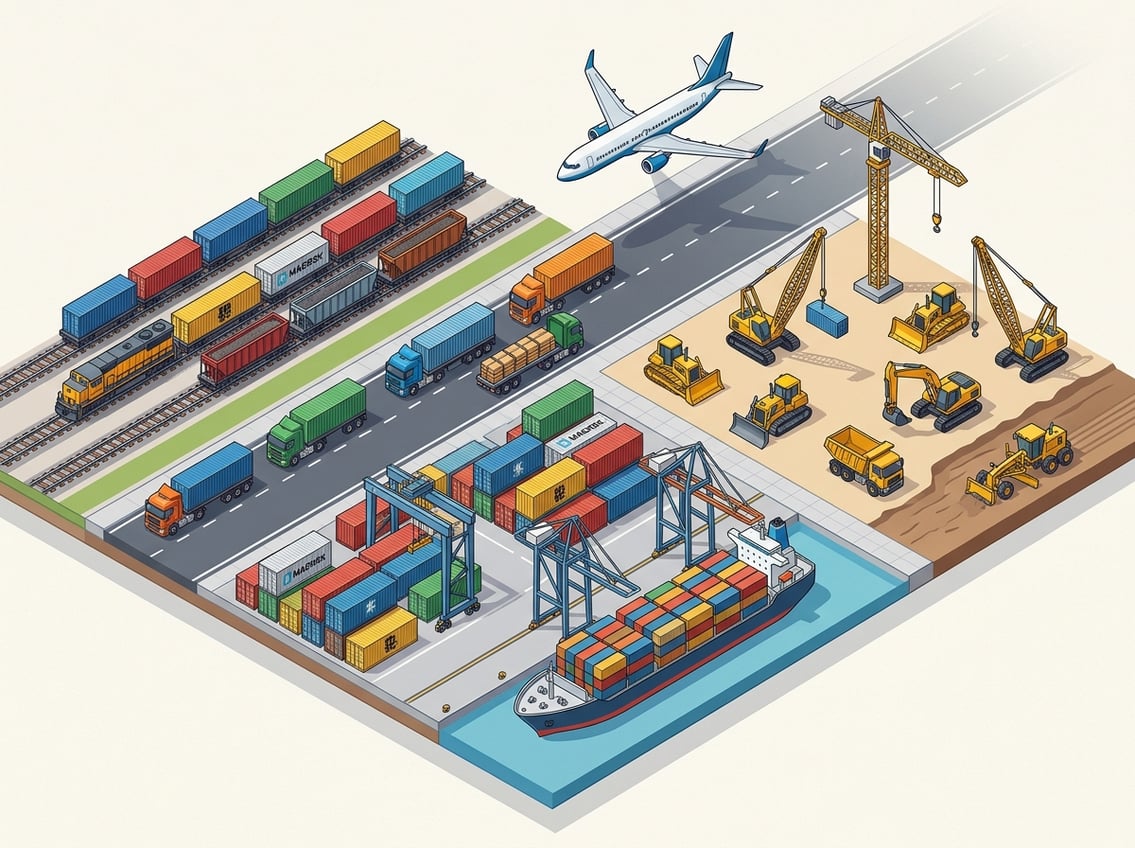
Transportation private credit financing covers three main asset categories: aircraft and aviation equipment, rail cars and locomotives, and commercial trucking fleets. Each type needs a different financing approach because of differences in lifespan, maintenance, and resale value.
Aviation Equipment
Aviation assets are some of the priciest in the transportation world. Commercial aircraft, cargo planes, and helicopters can run anywhere from a few million to over $400 million each.
Lenders like these assets because they hold value well and have active secondary markets. You can finance new or used planes, or even aircraft engines on their own.
Typical financing terms range from 7 to 12 years for commercial jets.
Common aviation assets eligible for financing:
- Commercial passenger aircraft
- Cargo and freight planes
- Regional jets and turboprops
- Helicopters
- Aircraft engines
- Ground support equipment
Your options often depend on the aircraft’s age and condition. Newer planes usually get better rates—they need less maintenance and last longer.
Rail and Locomotive Assets
Rail equipment financing covers both locomotives and different types of rail cars. These assets last a long time—30 to 40 years isn’t unusual—which makes them stable collateral.
Tank cars, hopper cars, boxcars, and intermodal containers all serve different cargo needs. You can finance a single rail car or a whole fleet.
Locomotives themselves range from small yard engines to massive heavy-haul units worth millions. The rail industry’s standardized specs help here.
You can buy or sell used equipment pretty easily, thanks to strong secondary markets. Most rail financing terms run 10 to 20 years to match the long life of the equipment.
Trucking Fleets
Class 6, 7, and 8 trucks make up the backbone of North American freight. These include everything from straight trucks to heavy-duty semis pulling trailers.
You can finance tractors, trailers, refrigerated units, flatbeds, and all kinds of specialized hauling gear. Most commercial truck financing covers both new and used vehicles, as long as they’re under 10 years old.
Typical loan terms are 3 to 7 years, depending on the truck’s age and type.
Key factors affecting truck financing:
- Vehicle class and weight rating
- New versus used condition
- Mileage and maintenance history
- Specialized equipment add-ons
You can also finance extras like telematics, GPS tracking, and maintenance packages. Many lenders bundle these into full fleet financing solutions.
Risk Assessment and Due Diligence
Private credit financing for transportation and equipment demands a close look at asset quality, borrower strength, and long-term value. Lenders need to verify collateral and assess both operational and financial risks unique to transportation.
Asset Valuation Methodologies
You’ve got to nail down accurate values for your equipment. The cost approach looks at what it would cost to replace the asset now, minus depreciation.
The market approach compares recent sales of similar equipment in your area. For specialized gear like refrigerated trailers or heavy-duty tractors, get third-party appraisals from certified valuers.
Physical inspections matter—they reveal maintenance quality, remaining life, and any hidden damage that could impact collateral value.
Document the equipment’s age, mileage, service history, and manufacturer details. Watch out for technological obsolescence—emissions rules and fuel efficiency standards can quickly make older vehicles less valuable.
Seasonality counts too. Dump trucks fetch higher prices during construction season, while dry van trailers tend to hold value more steadily.
Borrower Creditworthiness
You’ll need to dig into the borrower’s financials, cash flow patterns, and operating history. Look at balance sheets, income statements, and tax returns for at least the past three years.
Transportation operators have some unique credit factors. Check their customer concentration—are they relying on just one or two big clients?
That’s a risk. Make sure to verify their operating authority, DOT compliance, insurance, and safety scores.
Bad CSA scores or frequent violations can be red flags. Fuel cost management, driver retention, and maintenance practices also say a lot.
High driver turnover can drive up costs and signal management problems.
Residual Value and Market Liquidity
Equipment residual values depend on brand, model, condition, and secondary market demand. Class 8 tractors from top brands like Freightliner or Peterbilt might keep 30-40% of their original value after five years.
You need to know how quickly you can sell the collateral if things go south. Standard dry van trailers move faster than specialized gear like tankers or lowboys.
Location matters—equipment in big trucking hubs sells quicker than in rural areas. Market swings can really impact values.
During downturns, used equipment prices drop as carriers shrink fleets. Keep an eye on industry capacity, freight rates, and new equipment backlogs to spot trends.
Protect your position with proper UCC-1 filings and keep equipment titles current. Set up clear default procedures and build relationships with auction houses or dealers to speed up recovery sales if needed.
Legal and Regulatory Considerations
Transportation and equipment financing means lenders need to perfect security interests under state commercial codes. They also have to comply with federal and state rules, and deal with environmental liability tied to both the collateral and the loan itself.
Collateral Perfection and Security Interests
You’ve got to file a UCC-1 financing statement in the right jurisdiction if you want to perfect your security interest in equipment. For most movable equipment, that means filing where the debtor is located—usually their state of incorporation or their main business address.
Transportation assets like aircraft and vessels have their own rules. Aircraft require registration with the Federal Aviation Administration, while vessels over five net tons need documentation with the U.S. Coast Guard.
Your priority position depends on when you file and what kind of collateral you’re dealing with. Purchase money security interests give you super-priority if you file within 20 days after the debtor gets the equipment.
It’s smart to search for existing liens before closing and get estoppel certificates from senior lenders.
Cross-border deals? They’re complicated. If equipment moves between states or countries, you might have to refile or perfect under a new legal system.
Canadian provinces use Personal Property Security Act registrations. Many other countries stick to civil law systems with their own perfection methods.
Jurisdictional Compliance
Transportation equipment brings a web of regulations. Interstate trucking companies need USDOT numbers and have to follow Federal Motor Carrier Safety Administration rules.
You should check that borrowers keep their operating authority and insurance up to date—and make sure you’re listed as loss payee.
States have their own quirks. Some charge personal property taxes on equipment, while others exempt certain transportation assets.
Loan documents should require borrowers to keep all licenses and permits current. Rail equipment sometimes falls under Surface Transportation Board jurisdiction, depending on the deal.
International shipping gets even trickier with customs regulations and cabotage laws that keep foreign-owned vessels off domestic routes. Before funding, confirm borrowers have the right flags and certifications.
Environmental Regulations
Equipment can drag lenders into federal environmental liability. The Comprehensive Environmental Response, Compensation, and Liability Act can hold you responsible for contamination if you manage, foreclose, or operate the asset.
You should run Phase I environmental assessments on high-risk stuff like tanker trucks or industrial machinery.
Transportation assets have their own environmental rules. Marine vessels must meet ballast water discharge and air emission standards.
Diesel engines need to follow EPA tier standards, and older equipment might need retrofitting or retirement.
Loan agreements should include environmental reps, indemnities, and compliance covenants. Borrowers should keep pollution liability insurance where it makes sense.
Borrower Profiles and Needs
Transportation and equipment businesses looking for private credit all wrestle with capital intensity and cash flow timing. But their funding needs really depend on how they operate and what assets they use.
Fleet Operators
Fleet operators need financing that matches their revenue cycles and equipment replacement plans. You’ll usually need capital for buying vehicles, maintenance reserves, and seasonal working capital.
Because commercial vehicles cost a fortune, your financing needs often outpace what banks will lend.
Private credit lenders look at your fleet utilization and contract stability. If you’ve got long-term shipping contracts, you’ll probably get better terms.
Borrowing capacity depends on vehicle age, maintenance, and where you operate.
Key financing needs include:
- New vehicle purchases ($50,000–$150,000 per unit)
- Fleet expansion tied to contract wins
- Bridge financing during equipment swaps
- Working capital for fuel, insurance, and driver costs
Asset-based structures work well here, letting lenders advance funds against specific vehicles or equipment. This gives you room to add or retire units as business ebbs and flows.
Logistics and Freight Companies
Logistics and freight outfits face their own financing headaches. You’re juggling both owned assets and contracted capacity.
Capital needs go beyond vehicles—to warehouse equipment, tracking tech, and cross-dock facilities.
You usually need faster approvals than banks can offer. Private credit lenders get that, so they move quickly when you’re acquiring competitors or locking in big shipping deals.
Financing packages often combine equipment loans with working capital lines.
Your creditworthiness hinges on customer concentration and contract length. Lenders check your accounts receivable aging and shipper diversity.
Rates typically land between 8% and 15%, depending on collateral and business performance.
Equipment Leasing Firms
Equipment leasing firms use private credit to fund your lease portfolios and fuel growth. You need warehouse lines to originate leases before selling or holding them.
Your financing is more complex than end-users’ because you’re managing residual value risk and lease term matching.
Private credit gives you flexibility to structure facilities around your lease products and customer segments.
You’ll usually want revolving credit facilities sized at 70% to 85% of your net lease portfolio value. Advance rates depend on equipment type, lessee credit, and your servicing track record.
Yield and Return Characteristics
Transportation and equipment financing usually generates returns through base interest rates, fees, and solid recovery values backed by tangible collateral.
These deals often carry wider spreads than standard corporate loans because of the specialized asset risks and operational headaches.
Interest Rate Structures
Your base returns come from floating or fixed rates that reflect credit risk and asset quirks. Floating rates for middle-market borrowers with standard equipment usually sit at SOFR plus 400 to 800 basis points.
Specialized assets—think aviation or heavy construction—can push spreads above 900 basis points.
Fixed rates pop up in longer-term leases where depreciation is predictable. You’ll often see higher yields with monthly payments rather than quarterly, thanks to faster principal reduction and compounding.
Collateral type matters a lot. Generic equipment like standard trucks gets lower rates than specialized gear with limited resale markets.
You’ve got to price in liquidity risk—selling niche assets takes longer and might mean discounts.
Fee Income Opportunities
Origination fees in equipment finance run from 1% to 3% of the principal and really juice your first-year returns. You’ll also collect documentation, commitment, and monitoring fees.
Lease deals sometimes let you share in residual value if equipment sells for more than expected at contract end. This is especially true for aircraft and shipping vessels with strong resale markets.
Total fee income can tack on 150 to 300 basis points to your annual returns.
Amendment fees kick in when borrowers change payment schedules or swap equipment mid-term. Late payment penalties add income but also keep borrowers on track.
These extra fees help reduce your loss rates and keep returns steady, even when markets get bumpy.
Default and Recovery Rates
Equipment-backed lending tends to have lower default rates than unsecured corporate debt—usually 2% to 4% per year in normal times.
Hard collateral gives your loan downside protection that cash flow lending just can’t match. Transportation assets hold value pretty well since businesses always need trucks and machinery.
Recovery rates average 60% to 80% of principal when things go south. That’s way better than unsecured lending, where recoveries often fall below 40%.
Key variables are equipment age, maintenance, and secondary market depth when you need to sell.
Specialized equipment defaults a bit more but has similar recovery percentages, since there are fewer buyers. Liquidation takes longer—sometimes 6 to 12 months for niche gear versus 2 to 4 months for standard equipment.
Emerging Trends and Innovations
Private credit financing for transportation and equipment is changing fast. Technology, environmental priorities, and new capital strategies are all shaking up how lenders look at risk and structure deals.
Digitization in Asset Monitoring
Digital tech has totally changed how lenders track financed equipment. Now you can monitor location, usage, and maintenance with IoT sensors and telematics right on the assets.
This real-time data gives you a much clearer picture of how your collateral is performing. If a borrower runs into trouble, you can check actual condition and usage instead of relying on old inspections or whatever they tell you.
Predictive maintenance alerts are a game changer. If sensors flag a mechanical issue, you can step in before things get worse and the asset loses value.
A lot of private credit funds now require digital monitoring for high-value transportation equipment. The data feeds into your management systems, so you can make quicker calls on renewals, refinancing, or collections.
Sustainable Transportation Initiatives
Environmental factors are playing a bigger role in financing. You’ll see more deals aimed at electric vehicles, hybrid fleets, and emissions-reducing equipment as companies move away from diesel.
Green financing deals often come with perks—lower rates or longer repayment terms—because the assets have less regulatory risk and longer useful lives.
Due diligence now has to include environmental compliance and future rule changes. Equipment that’s clean today might be obsolete tomorrow if governments tighten standards.
Private credit is well-suited for companies upgrading fleets to meet sustainability goals. Banks usually hesitate on newer electric or alternative-fuel equipment because there’s not much performance history, so private credit steps in.
Alternative Financing Models
The equipment finance world is seeing new models beyond basic loans and leases. You can now offer embedded finance—credit decisions built right into equipment manufacturers’ sales processes.
Revenue-based financing is picking up for transportation assets that generate trackable income. Repayments flex with the revenue the equipment brings in, not a fixed schedule.
Partnerships between private credit funds and banks are growing. Banks originate and service the loans, while you provide the capital—combining their customer relationships with your willingness to take on risk.
There’s also a rise in synthetic structures—financing through securitization or special purpose vehicles instead of direct ownership. These can offer tax perks and better capital efficiency for everyone involved.
Portfolio Diversification Strategies
When you invest in transportation and equipment private credit, spreading your bets helps keep your portfolio safer. Don’t put all your eggs in one basket.
Strategy Types to Consider
You’ve got a few ways to diversify your financing portfolio:
- Industry diversification – Finance equipment across manufacturing, construction, transportation, and healthcare
- Asset type mixing – Blend vehicle deals with industrial equipment and specialized machinery
- Borrower diversity – Work with both sponsor-backed and non-sponsor companies
- Geographic spread – Fund equipment in various regions to reduce local risks
Asset-Based Finance Benefits
Asset-based financing doesn’t move in lockstep with traditional corporate credit markets. That’s a real plus. Equipment financing tends to generate steady cash flow from lease payments, which adds some stability.
Layering Your Approach
Don’t stick to just one strategy. Mix corporate lending with asset-based deals to grab different market opportunities.
This layered approach helps you manage risk when things get rocky, while still aiming for solid returns.
Private credit in transportation and equipment is still growing as traditional lenders pull back a bit. You can take advantage by building a diversified portfolio with different equipment types and borrower profiles.
Focus your analysis on specific deal structures rather than just big market averages when picking investments.
Challenges and Market Dynamics
The transportation equipment finance market hit $1.34 trillion in 2023. About 82% of end-users relied on financing for their purchases.
You’re up against plenty of challenges as both a lender and a borrower in this space. It’s not exactly a walk in the park.
Key Market Pressures
Private credit firms are moving quickly into equipment finance and pushing traditional banks to keep up. Banks are trying to modernize, leaning on their strengths in risk management and customer relationships.
Interest rate swings keep messing with financing costs and terms. Since 2022, rising rates have made it tough to predict long-term expenses.
Industry-Specific Challenges
You’ll have to deal with several headaches in transportation equipment financing:
- Geopolitical tensions that disrupt supply chains and market stability
- Inflationary pressures that eat into profitability
- Weaker demand trends in some segments
- Evolving emissions standards that force investment in newer equipment
- Potential tariffs that make costs unpredictable
Risk and Credit Discipline
Demand for financing remains strong, but lenders are tightening their risk discipline. Approval processes now focus more on equipment values and operational challenges in your industry.
Transportation-focused lenders usually offer better terms because they really understand your market. Their experience lets them structure loans that actually fit your needs and the realities of equipment lifecycles.
The regulatory environment keeps shifting. You’ve got to stay on top of new compliance requirements, which can impact both your financing options and how you run your business.
Frequently Asked Questions
Private credit financing for transportation and equipment covers specific asset types, unique underwriting, credit requirements around 600-650, structured interest rates from 8-15%, and specialized lending setups like ABL, ABF, and term loan B.
Which types of transportation assets and equipment are typically eligible for private credit financing?
Private credit lenders finance commercial trucks, semi-trailers, and heavy construction equipment. You can get funding for excavators, bulldozers, cranes, and loaders used on job sites.
Transportation assets also include fleet vehicles, refrigerated trucks, and specialized hauling rigs. Manufacturing gear like CNC machines, industrial presses, and assembly line systems all qualify. Even medical equipment—MRI machines, CT scanners, diagnostic tools—can be financed.
Both new and used equipment are options through private credit. Most lenders want used equipment to be under 10 years old and in solid working shape.
The equipment should generate revenue or play an essential role in your business. If it just sits around, lenders won’t be interested.
How do private credit lenders underwrite transportation and equipment financings compared with banks?
Private credit lenders care more about the equipment’s value and your cash flow than your credit score. They look at resale value and condition instead of just your credit report.
Banks want mountains of financial paperwork and stick to strict rules. Private lenders move faster and make decisions based on what matters for your business.
They’ll check your payment history, current revenue, and how the equipment will actually help your operations. If you’ve got industry experience, that’s a big plus with private lenders.
They want to see you know how to operate and maintain the equipment. The approval process often takes days, not weeks or months like with banks.
What credit score and financial profile are generally required to qualify for equipment financing?
Most private credit lenders look for a credit score between 600 and 650. You’ll need at least two years of business operations and steady revenue.
Your debt-to-income ratio should usually stay under 50% for the best terms. Lenders check your business bank statements from the last 6 to 12 months.
They want to see positive cash flow and that you can handle monthly payments. If you’re a startup with less than two years in business, you can still qualify, but you’ll probably need a larger down payment.
Down payments of 15-20% are common if your credit isn’t stellar. Personal guarantees are pretty standard for businesses making less than $1 million a year.
How are interest rates, fees, and repayment terms commonly structured in private credit equipment financings?
Interest rates for private credit equipment financing usually land between 8% and 15% per year. Your exact rate depends on your credit, the equipment, and the loan amount.
Better credit and newer equipment bring lower rates. Origination fees typically run from 1% to 3% of the loan.
Some lenders tack on documentation fees—anywhere from $500 to $2,000. You might also pay for an appraisal if the equipment needs a professional valuation.
Repayment terms are usually between 3 and 7 years for most equipment. Heavy machinery and transportation assets sometimes get terms up to 10 years.
Monthly payments cover both principal and interest. Some lenders even offer seasonal payment plans for businesses with cash flow ups and downs.
What is the difference between asset-based lending (ABL) and asset-based finance (ABF) for equipment-backed deals?
Asset-based lending gives you a revolving line of credit backed by several business assets. You can borrow against your accounts receivable, inventory, and equipment at the same time.
The credit available changes as your collateral values go up or down. Asset-based finance, on the other hand, is all about financing specific equipment purchases.
You get a fixed loan amount tied directly to one item or set of equipment. The equipment itself is the only collateral.
ABL is flexible and lets you tap working capital for different needs. ABF is better when you just need to buy or replace a particular piece of equipment.
ABL needs ongoing monitoring and reporting of your asset values. ABF is simpler and doesn’t require as much follow-up.
What does a term loan B (TLB) structure mean in private credit, and when is it used?
A term loan B is a leveraged loan structure with minimal amortization during the loan term. You make small monthly payments that mostly just cover interest.
The bulk of the principal comes due all at once in a balloon payment at maturity. TLB structures usually last 5 to 7 years.
They're common for larger equipment acquisitions. Companies often use this structure if they're expecting strong revenue growth or planning to refinance before the balloon payment.
Private credit lenders offer TLBs to established businesses with strong cash flow projections. This structure helps you keep working capital available during the first few years of equipment ownership.
You pay less each month than you would with a fully amortizing loan. Still, you really need a solid exit strategy.
TLBs make sense if you plan to sell assets, get equity funding, or refinance at better terms before the balloon payment hits.


