
Private Credit for Trade, Inventory and Commodities: Financing Solutions for Working Capital Needs

Trade and commodity businesses need money to buy goods, hold inventory, and close deals. Banks have long been the main source of this funding, but these days, tighter rules and longer approval times have made it harder to get quick cash.
This gap leaves many companies scrambling for working capital when they need it most.
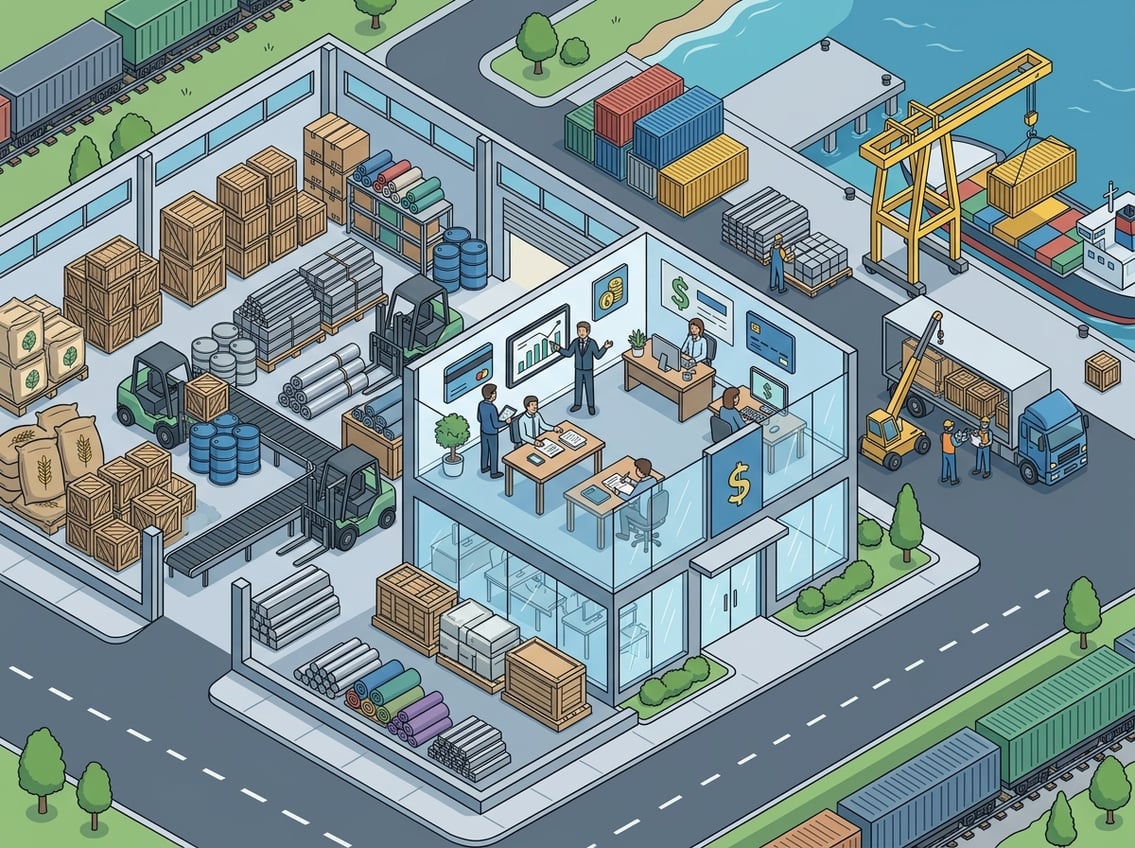
Private credit has stepped in to offer flexible funding for trade, inventory, and commodity deals. Businesses can get faster access to capital without the traditional banking delays.
Private lenders look at the value of your goods, contracts, and buyers, not just your credit score. They might provide revolving lines of credit or term loans backed by your receivables, inventory, or letters of credit.
This kind of financing is growing fast. Companies get the working capital they need to keep their supply chains moving, while investors earn returns tied to real goods and trade activity.
Knowing how private credit works in this space can help you make better calls about funding your operations.
Key Takeaways
- Private credit provides faster, more flexible funding for trade and commodity businesses compared to traditional bank loans.
- Lenders focus on the quality of your contracts, goods, and buyers instead of lengthy credit approval processes.
- This financing option is expanding rapidly as businesses seek alternatives to overcome banking constraints and capital gaps.
Key Financing Structures in Private Credit
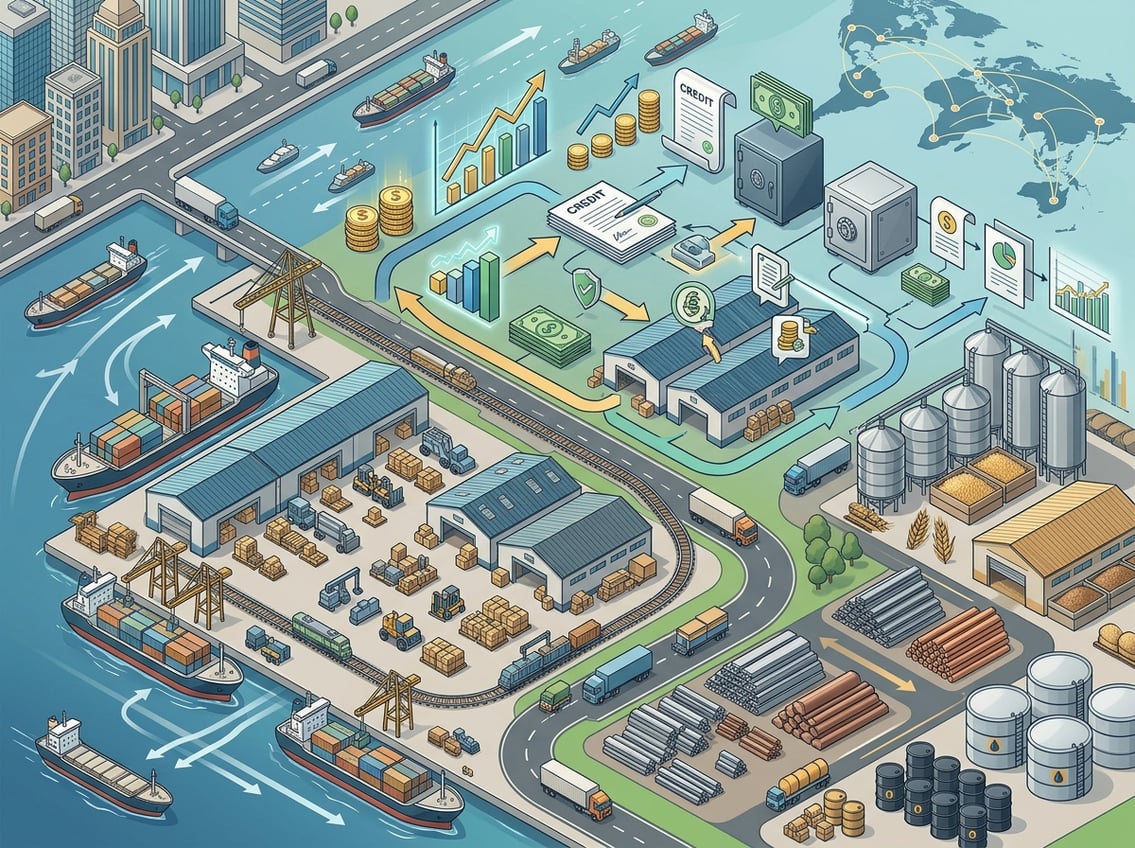
Private credit lenders use three main structures to finance trade, inventory, and commodities. These are asset-backed lending tied to specific collateral, structured trade finance built around transaction flows, and revolving credit facilities that adjust to working capital cycles.
Asset-Backed Lending Models
Asset-backed lending provides capital secured directly against physical inventory, receivables, or equipment. Your borrowing base rises or falls based on the value of your eligible collateral pool.
Lenders usually advance 50-85% against inventory, depending on liquidity and quality. Raw materials get lower advance rates than finished goods. Receivables from investment-grade buyers can support advances up to 90%.
Common collateral structures:
- Inventory financing against warehouse stock
- Receivables purchase and factoring
- Borrowing base certificates updated monthly or weekly
- Field examinations to verify collateral values
When you sell inventory, the proceeds automatically pay down the loan. This self-liquidating cycle reduces credit risk for lenders and keeps your interest costs tied to actual usage.
Costs typically range from SOFR plus 400-800 basis points. Rates depend on collateral quality, advance rates, and your financial strength.
Structured Trade Finance
Structured trade finance links funding directly to specific shipments and trade flows. Lenders release payments only when goods move and documents transfer, which creates natural risk controls.
Pre-export finance funds production before shipment. You get capital to manufacture or buy goods, and you repay when the buyer pays. Letters of credit or purchase orders provide the security.
Import financing covers the gap between paying suppliers and selling goods. Lenders control shipping documents and release them only against payment or acceptance of payment terms.
Key instruments:
- Standby letters of credit (SBLCs)
- Usance letters of credit with deferred payment
- Receivables backed by trade credit insurance
- Document-against-payment structures
Lenders keep control until payment milestones are met. Short durations—usually 30-180 days—help limit exposure to market swings or borrower issues.
Revolving Credit Facilities
Revolving facilities give you ongoing access to capital up to a set limit. You draw funds as needed and repay when cash comes in from operations. You pay interest only on what you actually use.
These facilities fit the ups and downs of commodity and inventory businesses. During busy seasons, you draw more. In slow periods, balances shrink or drop to zero.
Typical features:
- 1-3 year commitment periods
- Monthly or quarterly borrowing base calculations
- Covenants tied to liquidity and leverage ratios
- Unused commitment fees of 0.5-1% annually
Your available funds depend on eligible collateral values, updated through regular borrowing base certificates. Lenders check these with audits and field exams. This setup gives flexibility while keeping security through ongoing monitoring of your assets and cash flows.
Comparing Private Credit with Traditional Lending

Private credit lenders work under different constraints than banks. They make faster decisions and offer more flexible terms, while banks tend to have lower rates but stricter requirements and longer timelines.
Speed and Flexibility of Execution
Private credit lenders can close deals in 2-4 weeks, while banks often take 8-12 weeks for approvals. That speed comes from streamlined decision-making and fewer committees.
You get customized loan structures with private credit that fit your trade cycle or inventory turnover. Banks usually stick to standardized products that might not match your seasonal needs or price swings.
Private lenders can adjust terms mid-deal if things change. Shipment delayed? Market shifts? They might tweak payment schedules or collateral requirements. Banks, on the other hand, follow rigid policies and rarely bend once underwriting starts.
Private credit focuses on your business operations, not just your financial ratios. You spend less time digging up old data and more time showing how the loan will actually help your trade.
Risk Assessment Approaches
Banks judge your creditworthiness using traditional metrics like debt-to-equity ratios, credit scores, and years in business. You need strong financials and a solid banking history to get the best rates.
Private credit lenders look at your underlying assets and cash flows from specific transactions. They'll often accept inventory, receivables, and commodities as collateral, even if your credit profile doesn't hit bank standards. Purchase orders, supply contracts, and customer relationships matter a lot in their decisions.
Traditional Bank Focus:
- Credit scores and financial statements
- Historical performance data
- Personal guarantees
- Real estate collateral
Private Credit Focus:
- Asset quality and liquidity
- Transaction structure
- Industry expertise
- Cash flow timing
You face fewer automatic rejections with private lenders. Recent losses, limited operating history, or cross-border transactions don't always shut the door on your funding options.
Capital Accessibility Differences
Banks have pulled back from trade finance and inventory lending because of regulatory capital requirements. Your access to traditional financing often depends on your size, and smaller businesses get squeezed the most.
Private credit steps in where banks back out. You can get funding for international trade, commodity purchases, or inventory buildup even if your credit isn't perfect. The trade-off? Higher rates, usually 8-15% versus 4-7% from banks.
Borrowing capacity with private credit often tops bank limits since lenders focus on asset values, not just your balance sheet leverage. You might access up to 85% of eligible inventory value, while banks might cap you at 50-60%. Private lenders also accept non-traditional collateral like letters of credit, warehouse receipts, and in-transit goods.
Role in Supply Chain and Working Capital Optimization
Private credit solutions help businesses keep cash available while managing inventory and trade obligations across their supply chains. These tools relieve working capital pressure by offering alternatives to traditional payment structures.
Inventory Financing Strategies
Private credit providers finance inventory costs while goods move through the supply chain. You can tap funds based on the value of your inventory, letting you buy raw materials or stock up without draining your cash.
This approach works well if you need to build inventory for seasonal demand or long production cycles. Financing stays tied to the inventory, not your overall credit. As you sell inventory, you repay the loan from the sales revenue.
Key inventory financing structures:
- Asset-based lending against current inventory levels
- Purchase order financing for pre-sold goods
- Warehouse financing for stored commodities
These options let you scale inventory purchases based on market opportunities, not just available cash.
Delayed Payments and Payment Terms
Private credit lets you stretch payment terms with suppliers past the usual 30 or 60 days. You can negotiate longer payment periods, while your suppliers get paid right away by the credit provider.
This creates a gap between when you pay for goods and when you sell them. Longer terms improve your cash conversion cycle since cash stays in your business longer. You get more breathing room to process, sell, and collect payment before your own bills come due.
Payment extensions through private credit usually run from 90 to 180 days. The timeline depends on your supply chain and how the lender views risk.
Supplier and Buyer Benefits
Suppliers get paid immediately, instead of waiting for your payment terms to run out. That early payment helps them manage their own cash flow and working capital without hiccups.
You enjoy payment flexibility without straining supplier relationships. The financing cost is often lower than the pain of tied-up capital or penalties from running short on cash.
Suppliers may even offer better pricing if they get paid faster. You can negotiate discounts to offset some financing costs. Both sides end up in a stronger financial spot, keeping the supply chain steady and reducing the risk of cash flow disruptions.
Risk Management and Due Diligence Practices
Private credit in trade, inventory, and commodities demands careful evaluation of physical assets, thorough counterparty analysis, and consistent oversight. These steps are critical for managing the unique risks that come with lending against movable goods and international deals.
Collateral Evaluation Methods
You need to verify the existence, quality, and value of physical collateral before extending credit. Independent third-party inspections confirm that inventory or commodities really exist at claimed locations.
These inspections should include detailed counts, quality checks, and photographic proof.
Key evaluation components:
- Physical verification of goods at storage facilities
- Quality testing and grading by independent inspectors
- Market price checks using multiple sources
- Legal confirmation of ownership and lien priority
You should do initial inspections before funding and regular re-inspections during the loan. The frequency depends on how volatile or perishable the commodity is. Perishable goods need more frequent checks than stable ones.
Collateral margins should account for price swings and liquidation costs. You typically see loan-to-value ratios between 50-85%, depending on the commodity and market conditions. More volatile or specialized goods get lower advance rates to protect against price drops.
Creditworthiness of Counterparties
Before you approve credit facilities, you really have to dig into the borrower's financial health, operational history, and management team. Ask for audited financial statements that cover at least three years.
Look at cash flow patterns, current debt loads, and working capital trends. These numbers tell you whether the business can handle more borrowing or if they're already stretched thin.
Run background checks on the main principals. It's surprising what you can find—past defaults, legal trouble, or questionable deals sometimes pop up.
Trade references from suppliers and customers can show you how they pay and treat their partners. Don't forget to confirm licenses, permits, and compliance if the business operates in a regulated commodity market.
Check if the borrower knows their commodity sector inside and out. Experience with price risk, storage, and logistics makes a difference.
Companies with strong customer relationships and a diverse supply chain usually carry less credit risk than a startup or a one-customer shop.
Monitoring and Reporting Standards
You need real-time insight into collateral positions and borrower financials for the life of the loan. Monthly borrowing base certificates should break down inventory quantities, where it's stored, and current market values.
Reports should also include an aging analysis for inventory. That way, you can spot slow-moving or obsolete goods before they become a problem.
Essential monitoring requirements:
- Weekly or monthly collateral updates on quantities and values
- Quarterly financials—balance sheet, cash flow, the works
- Immediate alerts for major negative changes
- Regular field exams by your team or outside auditors
Electronic systems that track warehouse receipts, bills of lading, and inventory movements beat paper-based methods hands down. GPS and IoT sensors add another layer of verification for high-value shipments.
Set clear covenant requirements and check them regularly. Typical covenants: minimum liquidity, debt-to-equity ratios, and limits on asset sales without your say-so.
Legal and Regulatory Considerations
Private credit in trade and commodities sits in a web of international laws and regulations. You have to navigate cross-border legal structures, trade compliance, and financial crime prevention. It’s a lot, and skipping any step can cost you.
Cross-Border Transaction Challenges
Your commodity financing deals often cross borders, which means dealing with different legal systems and enforcement rules. Each country has its own contract laws, collateral rules, and insolvency regimes.
Documentation requirements change from one place to another. Sometimes you’ll need to register security interests in multiple countries to make sure you can enforce your rights.
Local counsel opinions, notarization, or even government sign-off might be required before you can close a deal. It’s rarely straightforward.
Currency controls can throw a wrench in the works. Some markets restrict moving funds or converting currencies, and exchange rates can swing your deal economics and collateral values.
Key legal considerations include:
- Choice of law and dispute resolution
- Recognition of foreign judgments
- Local licensing for commodity trading
- Tax impacts across borders
- Environmental and sustainability rules
Compliance with International Trade Laws
You have to follow export controls, sanctions, and trade restrictions that govern commodity movement. U.S. OFAC sanctions, EU restrictions, and UN embargoes all limit who you can do business with.
Screen everyone involved against sanctions lists before you sign anything. Some goods—minerals, agricultural products, energy—face commodity-specific restrictions. Where goods come from and where they're headed matters a lot.
Trade documentation needs to hit International Chamber of Commerce standards, especially UCP 600 for letters of credit. You’ll need proper bills of lading, inspection certificates, and origin docs for both lenders and customs.
Anti-Money Laundering Safeguards
Your private credit business needs strong AML programs that meet both local and international standards. Implement Know Your Customer checks to verify who you’re actually dealing with.
Commodity trades carry higher money laundering risks because of the big values and cross-border flows. Set up transaction monitoring to flag odd patterns—like trades priced way above or below market, or deals with high-risk countries.
Beneficial ownership transparency is a big regulatory focus now. Figure out who really owns the entities in your deals, not just the direct counterparty. Reporting rules vary, but you’ll usually have to file suspicious activity reports if you spot signs of financial crime.
Keep detailed records of all transactions for five to seven years, depending on the jurisdiction.
Market Trends and Growth Drivers
Private credit for trade, inventory, and commodities is on the rise. Institutional money is pouring into asset-backed finance, and new technology is changing the way businesses tap into capital.
Commodity price swings and digital platforms are shaking up risk and opportunity in this space.
Institutional Investor Participation
Big institutional investors are ramping up allocations to private credit backed by physical assets and trade finance. Pension funds, insurance companies, and sovereign wealth funds see asset-backed lending as a way to diversify and earn yields that move with interest rates.
As of 2026, the private credit market has topped $2 trillion in assets under management. Asset-backed finance, including trade and inventory lending, is a big piece of that growth.
When institutional investors compete for deals, your access to capital improves. They bring bigger checks and stick around longer than most banks. They're also open to different collateral types, like commodity stockpiles or inventory at various stages.
With more institutional capital, expect more standardized loan terms and reporting. Many will require detailed inventory tracking and third-party collateral verification.
Impact of Volatile Commodity Prices
Commodity price swings hit your borrowing costs and credit limits directly. When prices move fast, lenders cut advance rates on commodity-backed loans to protect themselves.
Between 2024 and 2026, energy, metals, and agricultural commodities saw some wild price moves. That brings both risk and opportunity for anyone seeking inventory finance.
Key impacts on your financing:
- Lenders lower advance rates during big price swings
- Margin calls go up when collateral values drop
- Hedging gets written into more loan deals
- Interest rates might include a volatility premium
Your working capital needs can spike when prices move against you. Private credit providers have gotten more flexible, offering structures that adjust for price cycles. Some now build in commodity derivatives to help you hedge risk.
Technological Innovations in Fintech
Digital platforms are changing how you get private credit for trade and inventory. Fintech firms use automated systems to value collateral, process applications, and monitor loans in real time.
Blockchain makes it easier to track goods through supply chains. Now you can give lenders verified data on where inventory is, how much there is, and what quality it’s in—no manual reports needed.
Technology improvements include:
- Real-time monitoring with IoT sensors
- Automated collateral valuation from market feeds
- Digital documents that cut funding times from weeks to days
- AI-powered credit checks for faster decisions
These tools cut your transaction costs and speed up funding. Some platforms even let you shop multiple lenders at once, which can help you get better terms. Plus, tech reduces fraud risk by giving lenders independent proof of your collateral—sometimes boosting how much they'll lend.
Challenges and Potential Risks
Private credit in trade, inventory, and commodities finance brings its own set of challenges and risks. The nature of private markets and the complexity of physical assets make things tricky for both lenders and borrowers.
Liquidity Constraints
Private credit funds usually lock up capital for long stretches, so getting out quickly isn't really an option. Unlike stocks or bonds, there’s no easy secondary market to offload your stake.
If default rates rise or markets get rocky, redemption pressure can build fast. Asset managers sometimes impose redemption gates or limits to slow outflows. In trade finance, where your money is tied up in inventory for months, this lack of liquidity can be a real headache.
You’ll need longer time horizons and solid cash reserves. If you need quick access to funds, private credit might not fit your business model.
Macroeconomic Instability
Commodity prices and trade volumes bounce around with global economics, currencies, and geopolitics. Private credit exposure can get shaky when these factors shift suddenly.
Interest rate hikes push up borrowing costs for mid-sized companies relying on private credit. Higher rates can squeeze margins and raise default risk. Supply chain hiccups can strand inventory or delay shipments, making it harder to repay loans on time.
Currency swings are another headache, especially if you’re financing cross-border trade. A sudden devaluation can make dollar-denominated debt much pricier for local borrowers.
Operational Complexity
Private credit here demands specialized know-how in logistics, commodity grading, storage, and international trade rules. Not every lender has that expertise.
Managing collateral gets complicated when it’s physical inventory or goods in transit. You have to monitor storage, verify quantities, and watch for quality loss over time.
The paperwork for trade finance is no joke—letters of credit, bills of lading, customs docs—it adds up. Concentration risk is real too. If your fund bets heavily on one commodity or trade route, a single disruption can hit you in several places at once.
Best Practices for Borrowers and Lenders
For Borrowers
Keep your trade flows and inventory positions well-documented. Lenders want to see detailed records of counterparties, goods, routes, and payment sources.
Build relationships with several credit providers. Having options beyond banks gives your business more flexibility.
Report regularly on collateral values and trade performance. Being transparent helps keep trust strong and can get you better terms.
For Lenders
Dig deep at the transaction level. Know the borrower, the goods, the logistics chain, and where the money’s coming from and going.
Use collateral management agreements for physical commodities. These three-party deals with independent managers give you legal control over pledged goods during the transaction.
Match your facility structure to the trade type:
- Pre-export finance for producers
- Borrowing base facilities for traders
- Receivables finance for distributors
- Inventory repo under a CMA
Spell out release conditions for collateral clearly. Define exactly when and how goods can move or be sold.
Keep an eye on credit insurance and guarantee structures. They help manage counterparty and political risks in cross-border deals.
Stick to consistent underwriting standards, but don’t be afraid to flex on deal structure. The market rewards speed and customization, as long as you keep risk controls in place.
Future Outlook and Opportunities
The private credit market could hit $3.4 trillion by 2030. That’s a massive jump and means plenty of new possibilities for trade, inventory, and commodities financing.
Asset-backed finance is shaping up to be a big growth engine by 2026. Private credit’s influence will likely expand as traditional banks keep pulling back from these sectors.
Key opportunities emerging in the market include:
- Closing liquidity gaps in global trade finance where banks have pulled out
- Providing flexible financing for commodity traders and producers
- Offering inventory-backed loans with faster approval times
- Supporting cross-border transactions with fewer regulatory headaches
Private credit firms aren’t just competing with banks anymore—they’re teaming up. You’ll probably notice more hybrid financing options that blend traditional banking with private credit’s flexibility.
The trade finance sector gives private lenders some pretty appealing risk-return opportunities. Businesses can tap into more diverse funding sources and tailor-made loan structures that actually fit their trade cycles.
Still, this growth isn’t all upside. The market’s getting more crowded, and private credit providers are tightening up their underwriting standards.
Capital demand just keeps rising around the world. Private credit will stick around as a key piece of the trade and commodities finance puzzle. If you haven’t already, it’s probably worth building some relationships with private credit providers before things get even busier.
Frequently Asked Questions
Private credit financing for trade, inventory, and commodities usually means secured loans against physical goods. Advance rates run between 50% and 85% of the collateral’s value.
Lenders manage risk using title retention and monitoring tools. They look at the quality of the commodity, your counterparties, market liquidity, and your operational history. Expect upfront fees of 1% to 3%, plus annual interest rates from 8% to 15%.
How does private credit financing work for import and export transactions?
Private credit lenders give you capital to finance your purchase of goods from overseas suppliers. They can also bridge the gap between shipment and when your buyers actually pay.
Usually, you get financing secured by the goods or trade documents like letters of credit. The lender hangs onto the title until you sell the goods and repay the loan.
You repay when your buyer pays you—typically within 30 to 180 days. Some lenders set up pre-export finance, funding your inventory before it ships. Others offer post-import financing once goods land in your warehouse.
What types of inventory and commodities are typically eligible as collateral?
Lenders want liquid commodities with clear pricing and active markets. Think grains, coffee, cotton, plus energy products like crude oil and refined fuels.
Metals are popular too—gold, silver, copper, aluminum. Your inventory needs to be standardized, easy to grade, and simple to value using public prices.
Non-perishable goods with steady demand make the best collateral. Lenders avoid specialized inventory, perishables, or anything with wild price swings. You’ll need solid storage and insurance to qualify.
What are the key underwriting criteria lenders use for trade, inventory, and commodity-backed loans?
Lenders check your experience with the specific commodity or sector. They want to see a solid track record and good relationships with suppliers and buyers.
Collateral quality and marketability really matter. Lenders consider how fast they could sell your goods if you default and what they’d recover.
Your counterparties get scrutinized too. Lenders look at their financial health, payment histories, and credit ratings. They’ll also review your accounting, controls, and inventory systems.
Market conditions for the commodity play a role. Lenders watch price trends, volatility, and trading volumes to size up risk.
How are borrowing bases calculated and monitored for inventory and commodity facilities?
Your borrowing base starts with the current market value of eligible inventory or commodities. Lenders apply an advance rate—usually 50% to 85%—depending on how liquid and stable the commodity is.
They’ll knock down the value for market risk, quality issues, or storage costs. Any prior liens or obligations get subtracted too.
You’ll need to send in regular reports, often weekly or monthly, showing inventory levels, locations, and market values. Lenders do field audits to check the actual inventory matches your paperwork.
Many facilities require third-party warehouse receipts or independent collateral managers to keep tabs on the goods. The borrowing base adjusts automatically as you buy or sell inventory or if commodity prices shift.
You can draw more funds when the base rises, but you might have to pay down the loan if values drop.
What fees, interest rate structures, and covenants are common in these facilities?
Expect to pay an upfront origination fee—usually 1% to 3% of the facility size. Annual commitment fees of 0.5% to 1.5% apply to any unused part of your credit line.
Interest rates typically run from 8% to 15% per year, calculated as a spread over something like SOFR. Your rate depends on deal complexity, collateral quality, and your credit profile. Cross-border deals or exotic commodities can push rates higher.
Facilities come with financial covenants—minimum net worth, leverage limits, and liquidity requirements. Operational covenants might restrict commodity types, regions, or counterparty concentration.
Most agreements ban distributions or asset sales without the lender’s okay. You’ll need to keep insurance on all collateral and provide regular financials. Lenders often require the collateral value to stay at least 10% to 20% above the loan balance.
What are the main risks and mitigants for lenders and borrowers in commodity and inventory-backed financing?
Price volatility really stands out as the main risk for both lenders and borrowers. The value of your collateral can tank overnight if the market shifts, and suddenly the numbers don't add up on your loan.
Lenders usually protect themselves with conservative advance rates. They also revalue the collateral often, just to keep tabs on any sudden changes.
Fraud and inventory misrepresentation can seriously expose lenders. Sometimes borrowers overstate quantities, swap in lower-grade goods, or even pledge the same inventory to more than one lender—yeah, that happens.
To guard against this, third-party warehouse operators and field audits come into play. These checks help verify that the collateral actually exists and matches the promised quality.
Cross-border deals bring their own headaches, mainly political and regulatory risks. Export restrictions, tariffs, or sanctions might block shipments or freeze assets without warning.
Insurance products like political risk coverage or trade credit insurance can offer some peace of mind here, though nothing is ever foolproof.
Operational failures during storage or transport are another headache. Fire, contamination, or spoilage can all chip away at collateral value.
So, you really need comprehensive property and casualty insurance, with the lender named as loss payee. It's not glamorous, but it's essential.
And then there's counterparty default. Maybe your buyer flakes out and doesn't pay, or your supplier fails to deliver—either way, the whole transaction can just fall apart.
Lenders try to stay ahead of this with credit checks on everyone involved. Sometimes, they'll require payment guarantees or standby letters of credit, just to be safe.


