
Private Credit for Infrastructure and Power Projects: Financing Solutions for Long-Term Development

Infrastructure and power projects need huge sums to get off the ground. Banks used to fund most of these, but lately, they've backed away from such large, complex deals.
Private credit has stepped in, offering flexible financing solutions for energy facilities, data centers, highways, and other capital-heavy projects that keep everything running.
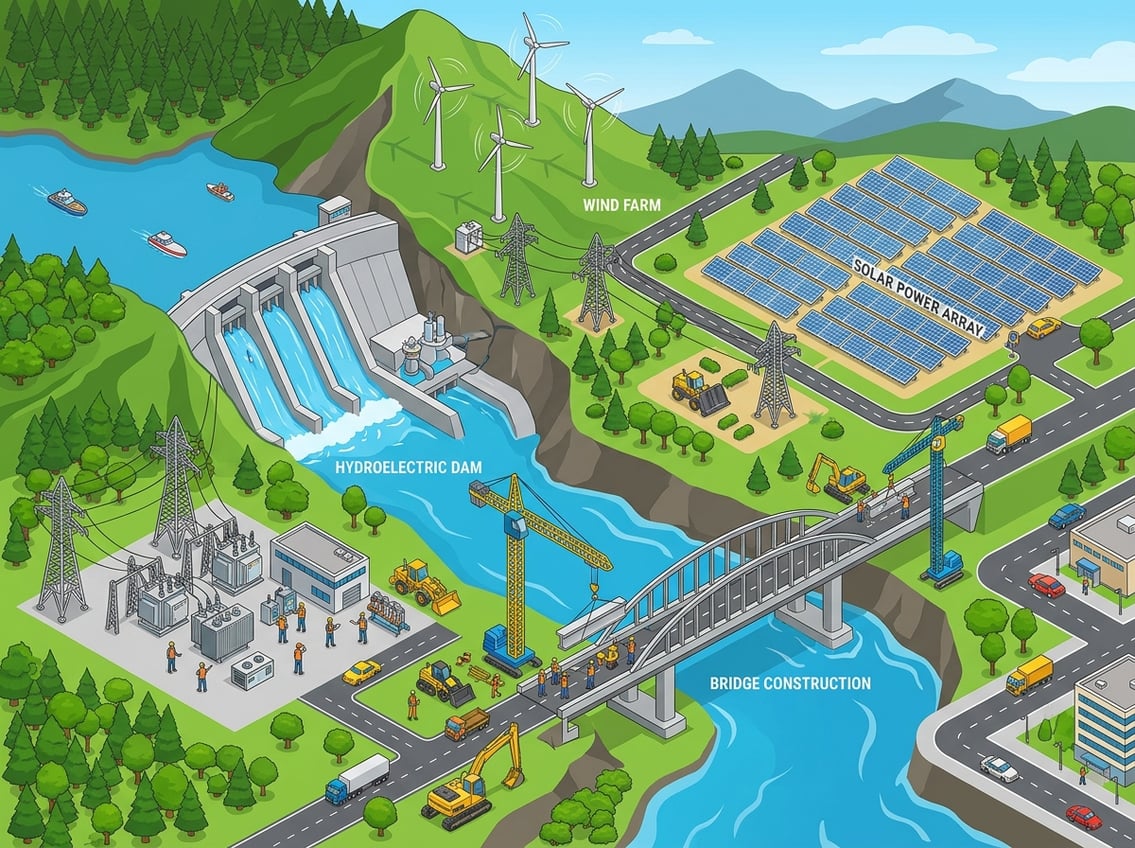
The global need for infrastructure investment is staggering. Experts guess we’ll need about $106 trillion in infrastructure funding by 2040.
Private credit lenders can customize deals for each project, which is something standard bonds or bank loans can’t really do. This flexibility is a game changer for new types of projects like renewable energy and tech infrastructure.
You might wonder why any of this matters. These financing arrangements affect the power plants that light up your house, the data centers behind your favorite apps, and even the roads you drive every day.
Knowing how private credit works shines a light on how big infrastructure projects get funded in today’s world.
Key Takeaways
- Private credit steps in with flexible funding for infrastructure and power projects when traditional banks can’t or won’t meet demand.
- The infrastructure sector needs $106 trillion in investment by 2040, so there’s a massive opening for private credit solutions.
- Private credit deals offer project-specific terms, which work better for complex projects like renewable energy and data centers.
Foundations of Private Credit in Infrastructure Finance
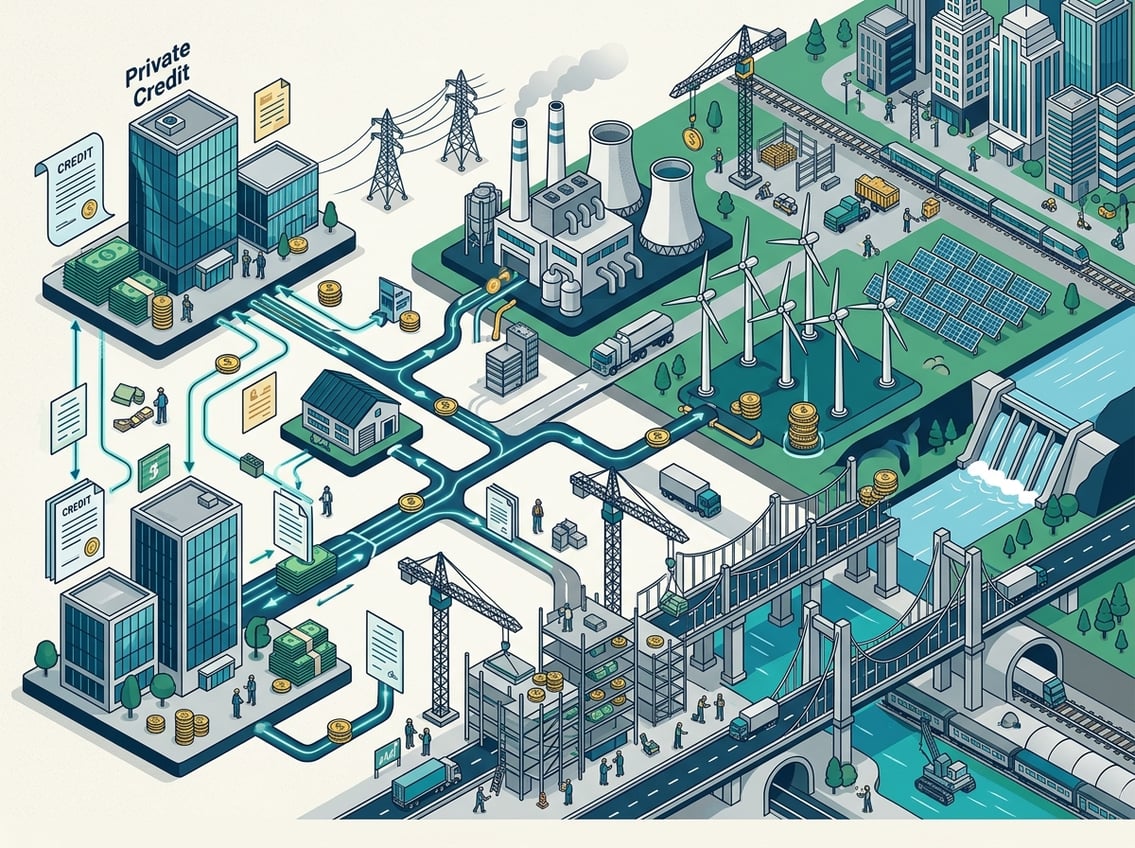
Private credit has become a major funding source for infrastructure projects. Institutional investors and specialized lenders now provide capital directly to borrowers, skipping traditional banks.
The infrastructure debt market needs over $106 trillion by 2040. That’s a huge opportunity for private credit providers to step in where commercial banks have stepped out.
Key Players and Stakeholders
Direct Lenders are the backbone here. These specialized funds and asset managers put up anywhere from $50 million to over $1 billion per deal.
Insurance companies, pension funds, and sovereign wealth funds usually supply the capital for these lenders. They’re the money behind the scenes.
Borrowers are project developers, infrastructure operators, and utilities looking for financing. You’ll see them working in renewable energy, transportation, telecom, and water.
Advisors and Intermediaries connect everyone. Debt advisory firms structure deals, and technical consultants check if projects are viable.
Legal teams negotiate contracts that can run hundreds of pages, all to protect lender interests.
Core Financing Structures
Senior Debt usually covers 60-75% of a project’s total cost. Lenders secure this debt against project assets and cash flows, with terms that often last 15-25 years.
Mezzanine and Junior Debt fill the gap between senior debt and equity. This layer offers higher returns—think 8-12%—but comes with more risk since it’s lower in the pecking order.
Project Finance Structures keep risks inside special purpose vehicles. Financing depends on projected cash flows, not the sponsor’s balance sheet.
Payment waterfalls make sure debt gets paid before equity, and reserve accounts help keep things running if there’s a hiccup.
Risk and Return Dynamics
Infrastructure debt tends to deliver returns of 5-9% for senior positions and 10-15% for subordinated ones. These yields come from the steady, contracted revenue streams in infrastructure.
Credit Risk is generally lower than in corporate lending because the loans are asset-backed and regulated. Historically, default rates sit below 1% per year for investment-grade infrastructure debt.
Duration Risk acts differently than with regular bonds. Many infrastructure loans use floating rates based on SOFR or EURIBOR, so they’re less sensitive to interest rate swings.
Revenue contracts that last 15-30 years help ensure steady cash flow for debt repayment, even if the economy wobbles.
Role of Private Credit in Power Project Development
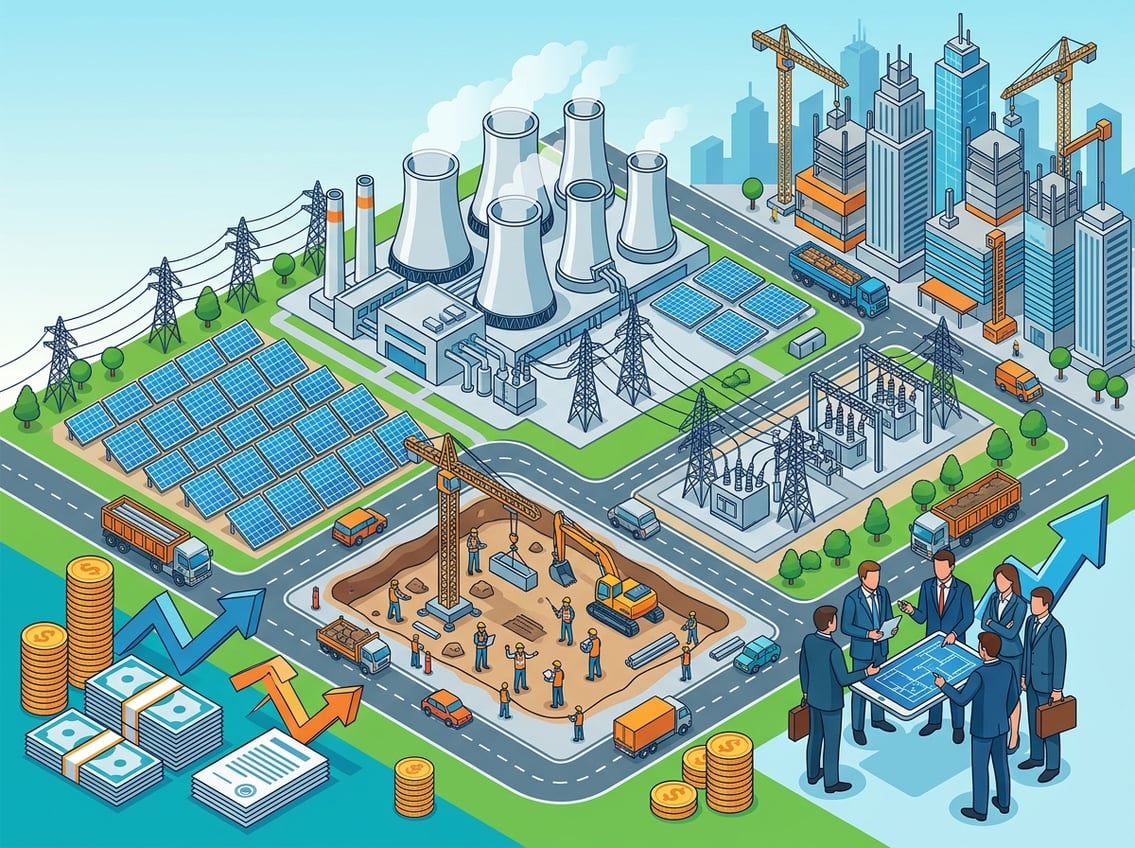
Private credit providers get involved at every stage of a power project, from the first handshake to construction and ongoing operation. They finance both renewable and conventional power plants, often with more flexible terms than banks.
Project Origination and Sourcing
Private credit funds hunt for power deals by building direct relationships with developers, utilities, and industrial energy users. You can tap into this capital without the usual bank syndication headaches.
These lenders often target mid-sized projects—think $50 million to $500 million. They focus on projects with predictable cash flows.
Power purchase agreements and offtake contracts make these deals attractive. Private lenders like projects that bigger institutions sometimes overlook, such as specialized grid upgrades or next-gen energy tech.
Private credit firms have origination teams with technical chops in power generation. They size up projects based on technology risk, counterparty credit quality, and regulations.
This expertise lets them move faster than banks when it comes to due diligence and negotiating terms.
Financing Renewable Energy Initiatives
Renewable projects—solar, wind, battery storage—get a lot of love from private credit markets. These facilities need capital during both development and early operations.
You can secure funding for these projects even if banks have maxed out their exposure. Private lenders structure deals around clear milestones and revenue streams.
Construction loans often flip into term debt once the facility is up and running.
For proven tech like solar and onshore wind, you’ll see better rates. If you’re building something riskier, like green hydrogen or advanced geothermal, expect to pay more.
Private credit steps in where green bonds and big institutional investors sometimes hesitate, especially with smaller or emerging projects.
Support for Conventional Generation
Natural gas plants and grid reliability projects also draw in private credit. Reliable, flexible power is needed to back up renewables.
Private lenders fund peaker plants, combined cycle units, and grid upgrades. They focus on facilities that supply baseload power or handle peak demand.
Financing terms depend on the technology and contracts in place. Gas plants with long-term capacity contracts usually get better terms than those exposed to spot markets.
Private credit also helps pay for upgrades to older plants, like efficiency improvements or carbon capture. This keeps the grid stable while the energy transition rolls on.
Investment Strategies and Products
Private credit investors use different structures to finance infrastructure and power projects. Each product has its own risk, return, and spot in the capital structure.
Direct Lending Vehicles
Direct lending funds hand out loans straight to project developers and operators, skipping the banks. You get tailored terms that fit your project’s quirks and timeline.
These loans are usually senior secured, taking first dibs on project assets. Amounts range from $50 million up to $500 million or more.
Interest rates? They’re generally between 6% and 12%, depending on risk and market vibes.
Direct lenders love sectors like renewables, data centers, transport, and utilities. You’ll notice deals close faster—sometimes in just a couple of months.
These funds let you tweak covenants and repayment schedules more than banks will. Many direct lending vehicles stick to investment-grade or near-investment-grade credits to balance yield and safety.
Mezzanine and Subordinated Debt
Mezzanine debt sits between senior loans and equity. You take on more risk for returns of 10% to 15%.
This debt is subordinate to senior loans but still ahead of equity if things go south. Sometimes, you get equity participation rights or warrants, giving you a shot at extra upside if the project beats expectations.
Loan-to-value for mezzanine financing usually sits between 60% and 80%. Subordinated debt fills funding gaps when senior loans and equity aren’t enough.
Projects in power generation and renewables often use this to bridge the gap.
Syndicated Loans
Syndicated loans pull together multiple lenders to share one giant loan. You join other investors to fund big projects that would be too much for any one lender.
A lead arranger puts the deal together and keeps everyone on the same page.
Syndicated infrastructure loans typically start at $500 million and can run to several billion. Each lender chips in based on their appetite for risk.
You get paid back in proportion to your share, and you share the same security as the others. This lets you get in on big deals and spread your risk.
You’ll see this approach used for power plants, toll roads, and airport expansions.
Project-Specific Investment Funds
Project-specific funds focus on just one development or a small group of related assets. You put your money into a dedicated vehicle for, say, a single power plant or transmission line.
These funds give you concentrated exposure to projects you really believe in. Investment periods usually match up with construction and early operations—maybe 3 to 7 years.
Returns come from interest payments during the build and once things are running. The fund setup means you know exactly where your money’s going.
You can get out by refinancing with permanent capital or selling to long-term owners.
Credit Risk Assessment and Management
Private lenders use a toolkit of processes to size up credit risk in infrastructure deals. Strong covenants and thorough due diligence help them avoid defaults on these long-term, often unrated loans.
Due Diligence Processes
Due diligence covers technical, financial, and legal angles. You need to look at the construction timeline, technology risks, and operational needs before writing a check.
Financial analysis should include cash flow modeling for different scenarios. You’ll dig into revenue contracts, offtake agreements, and demand forecasts to see how stable the payments look.
Projects often have contracted or regulated revenues, which helps cut down uncertainty. Sponsor experience matters a lot—if the team has a track record of finishing projects on time and on budget, that’s a big plus.
Legal due diligence checks permits, land rights, and regulatory approvals. You have to confirm all the paperwork is in order before shovels hit dirt.
Covenant Structures
Loan agreements should include both affirmative and negative covenants tailored to infrastructure. Debt service coverage ratios usually land between 1.2x and 1.4x for operational assets.
Key financial covenants include:
- Minimum debt service coverage ratio
- Loan life coverage ratio
- Project life coverage ratio
- Maximum leverage limits
You’ll also want maintenance requirements and insurance obligations. Cash waterfall structures make sure debt gets paid before equity.
Reserve accounts add another layer of safety. You’ll typically see debt service reserves covering six to twelve months of payments, plus maintenance reserves for big repairs or equipment swaps.
Credit Rating Considerations
Most private infrastructure debt stays unrated because of deal size and cost. You’ll need to develop your own internal credit assessment methods to evaluate these investments.
When analyzing, consider asset essentiality and revenue resilience. Infrastructure that provides critical services, like power generation or transportation, faces much lower demand risk than, say, a leisure facility.
Collateral quality really matters. Physical assets with long useful lives and stable cash flows support better recovery values. It’s important to check if revenues come from investment-grade counterparties or regulated tariffs.
Project stage makes a big difference for credit risk. Operational assets carry less risk than greenfield construction projects. You’ll want different assessment approaches for each phase of the asset lifecycle.
Legal, Regulatory, and Policy Frameworks
Private credit transactions for infrastructure and power projects operate inside complex legal systems that can shift a lot from country to country. The success of these financing deals depends on understanding local regulations, following established contractual standards, and making the most of available government support mechanisms.
Jurisdictional Variations
Every country keeps its own legal frameworks for private credit in infrastructure. Your ability to structure deals depends on knowing local PPP rules, licensing, and what financing structures are allowed.
In developed markets like the US and EU, regulatory frameworks give you clear guidelines. These places usually offer strong creditor protections and transparent dispute resolution. Emerging markets can be trickier, with evolving regulations and less depth.
Foreign investment restrictions can limit your lending options. Some countries cap foreign ownership in critical infrastructure or require local partners. You also need to look at currency controls, repatriation rules, and cross-border payment regulations before you commit capital.
The way a country treats security interests can vary a lot. Common law countries generally let you enforce collateral more easily than civil law jurisdictions. Your documentation has to meet local perfection requirements to ensure your security position is actually enforceable.
Contractual Standards
Standard documentation frameworks make private credit transactions for infrastructure much smoother. Loan Market Association (LMA) and Asia Pacific Loan Market Association (APLMA) templates are common starting points for financing agreements.
Key contractual provisions include representations and warranties, financial covenants, and events of default that fit the project’s risks. Your loan agreements should address construction completion risk with milestone-based funding releases and retention mechanisms.
Direct agreements between lenders and project counterparties protect your interests if a borrower defaults. These contracts set up step-in rights so you can replace underperforming operators or contractors without ending essential project agreements.
Security packages usually include:
- Pledge of project equity interests
- Assignment of project contracts and revenues
- Mortgage over project assets and land rights
- Control over project bank accounts
Impact of Government Incentives
Government support can make or break infrastructure financing. When you’re lending, consider tax credits, subsidies, and guarantee programs that can improve project economics.
Power projects especially benefit from feed-in tariffs, renewable energy certificates, and production tax credits. These incentives give revenue stability, which strengthens your credit position. Still, you need to assess the risk that regulations or policies could change and reduce these benefits.
Export credit agencies and multilateral development banks offer political risk insurance and partial credit guarantees. These tools help protect you against government expropriation, currency inconvertibility, and contract breaches by public entities. Co-lending with these institutions can also give you extra comfort due to their preferred creditor status.
Public-private partnership frameworks sometimes include government revenue guarantees or minimum traffic guarantees for transportation projects. You’ll want to look closely at the creditworthiness of government obligors and whether those commitments are legally enforceable.
Emerging Trends in Private Credit Markets
Private credit markets are changing fast. Three big shifts are reshaping how capital flows into infrastructure and power projects: a boom in data center and telecom financing, more environmental standards in lending, and a geographic spread beyond traditional Western markets.
Digital Infrastructure Financing
Data centers, fiber optic networks, and telecom towers are now the fastest-growing slice of infrastructure private credit. The AI boom is driving huge demand for computing facilities, and private lenders are stepping in to finance construction and expansion projects that banks often find too specialized.
Private credit funds put about $45 billion into digital infrastructure in 2025. This money financed everything from hyperscale data centers to 5G network buildouts. You can typically get higher yields here—think 8% to 12% for senior debt—compared to more traditional infrastructure lending.
Technical complexity is a big factor. Lenders need to understand power consumption, cooling systems, and connectivity requirements. Private credit funds are hiring folks with tech and engineering backgrounds to dig into these opportunities.
Impact Investing and ESG Integration
Environmental, social, and governance (ESG) criteria now shape most private credit decisions in infrastructure. Lenders look at carbon emissions, community impact, and governance structures as part of underwriting—not just as nice-to-haves.
Renewable energy projects get the best lending terms when they show strong ESG profiles. You might see interest rate cuts of 25 to 50 basis points for projects that hit certain sustainability benchmarks. Private credit funds sometimes structure loans with performance-based pricing that rewards hitting environmental targets.
Climate risk assessment is now standard. Lenders check for physical risks like flooding or extreme weather, plus transition risks tied to policy and technology changes.
Geographic Expansion
Private credit for infrastructure is spreading quickly across Asia, Latin America, and select African markets. India, Indonesia, and Vietnam together pulled in over $12 billion in private credit commitments for infrastructure and power in 2025.
You’ll deal with different regulatory frameworks and political risks in emerging markets, but the returns often make up for it. Interest rates on infrastructure loans in developing economies can top 10% for dollar-denominated debt. Local currency lending pays even more, but brings foreign exchange risk.
Middle Eastern sovereign wealth funds and Asian insurance companies are now major capital sources for these cross-border deals. They bring patient capital that fits the long-term nature of infrastructure assets.
Challenges and Opportunities in Private Credit Deployment
Private credit deployment in infrastructure and power projects hits unique hurdles around liquidity, competition, and market uncertainty. These issues shape how you structure deals and manage risk.
Liquidity Constraints
Private credit investments in infrastructure usually lock up your capital for a long time—think 7 to 15 years. You can’t just sell these positions like public bonds or stocks.
This illiquidity puts pressure on your fund structure. You’ve got to match investor commitments with project timelines. Many institutional investors now ask for shorter holding periods, but infrastructure projects need long-term capital to reach operational milestones.
The secondary market for private credit is still thin. If you want out early, you might have to sell at a 10% to 20% discount. Some managers are building continuation funds and other structures to address this, but those can add complexity and cost.
Competition with Traditional Lenders
Banks are pulling back from certain infrastructure lending activities because of regulatory constraints. That opens the door for private credit providers like you.
But banks still dominate relationships with big developers and large projects. You’ll face competition on pricing, especially for lower-risk, investment-grade deals. Banks can often offer cheaper capital thanks to lower funding costs and existing client ties.
The landscape now includes partnerships between banks and private lenders. These let you access deal flow while banks handle origination and servicing. You might find better opportunities in middle-market projects, specialized sectors like data infrastructure, or situations needing flexible terms that banks can’t provide.
Market Volatility
Interest rate swings hit your underwriting assumptions and portfolio values directly. Rising rates push up borrowing costs for projects, which can squeeze returns or make deals less appealing to sponsors.
Policy changes around energy transition and infrastructure funding bring both risk and opportunity. Regulatory shifts can delay projects or flip the economics overnight. You need strong due diligence to gauge political and regulatory risks wherever you deploy capital.
The $2.2 trillion private credit market faces different conditions now than during its earlier growth spurt. You’ll want to adapt your strategies for credit spread compression, more scrutiny on borrower quality, and potential defaults as older loans mature in tough rate environments.
Case Studies and Real-World Applications
Private credit has funded major infrastructure and power projects across several sectors in recent years. These deals show how alternative lenders structure transactions and manage risk under real-world conditions.
Notable Infrastructure Transactions
Private credit funds have financed large-scale infrastructure projects worth billions. Data center financing is a major focus, with private lenders providing debt for facilities that support cloud computing and AI operations.
Transportation infrastructure is another big area. Private credit has funded toll road expansions, airport terminal upgrades, and rail network improvements. These deals usually feature long-term contracts with government entities or established operators.
Water and wastewater systems have also attracted private credit, as municipalities look for ways to fund aging infrastructure. These projects often include revenue streams from user fees and regulatory protections that reduce credit risk.
Some common features of these deals:
- Loan sizes from $50 million to over $1 billion
- Terms running 10 to 25 years
- Security backed by physical assets and cash flows
- Covenants that protect lender interests through construction and operation
Successful Power Project Financings
Renewable energy projects have drawn a lot of private credit funding since 2020. Solar farms and wind installations usually secure financing based on power purchase agreements with utilities or corporate buyers.
Natural gas facilities still attract private credit, even as the energy transition gains steam. These projects often serve as backup for grid stability while renewables ramp up.
Battery storage systems are a growing category. Private lenders are backing projects that store excess renewable energy for peak periods. These deals depend on capacity payments and energy arbitrage revenues.
Transmission line projects have also landed private credit support. These investments connect new generation sources to existing grids and help fix bottlenecks in power distribution.
Future Outlook and Innovation
Private credit looks set to become a major funding source for infrastructure and power projects through 2040. The market sees about $106 trillion in infrastructure opportunities across sectors during this period.
Key Growth Areas
Private credit will keep expanding into:
- Data centers needing rapid capital deployment
- Energy transition projects moving toward renewables
- Power grid modernization and expansion
- Telecom infrastructure, including broadband networks
The private credit market is shifting from simple corporate lending to a more complex system. You now have access to strategies and capital structures that just weren’t available before.
What’s Driving the Change
Power companies and independent producers are leaning more on private capital than traditional bank financing. This happens because private lenders can move faster and offer more flexible terms for project finance.
Direct lending for infrastructure projects should keep growing in 2025 and beyond. Expect more capital flowing into investment grade, high yield, and equity opportunities as deal volume rises.
Technology and Infrastructure Needs
Demand for capital in data centers, energy projects, and domestic manufacturing is climbing. Private credit fills funding gaps that banks can’t always cover due to regulatory or capacity limits.
Private infrastructure debt helps project sponsors lower their cost of capital. That makes projects more viable and helps sponsors compete better.
Frequently Asked Questions
Private credit for infrastructure and power projects uses lending structures, risk frameworks, and return benchmarks that differ from traditional financing. Lenders look at construction risks, revenue stability, and sector trends to build deals that match investor needs with project realities.
How does private credit differ from bank lending and project finance in infrastructure and power deals?
Private credit lenders usually offer more flexible terms than banks. You can negotiate custom repayment schedules, covenant structures, and documentation that fit your project’s cash flow.
Banks face regulatory constraints that limit their ability to hold long-term infrastructure loans. Private credit funds don’t have those balance sheet limits, so they can offer financing with tenors that match 15-25 year project lifecycles.
Speed and certainty of execution matter. You can often close a transaction in 8-12 weeks with a private lender, compared to 4-6 months with traditional bank syndication.
Private credit providers keep fewer lending relationships than banks, so they focus on building deeper partnerships with borrowers. This relationship model often leads to more flexible approaches when projects change or need refinancing.
What are the typical structures and key terms for infrastructure and power private debt investments?
Senior secured debt sits at the core of most infrastructure private credit deals. Your loan gets first dibs on project cash flows and security over the assets themselves, usually at 60-75% loan-to-value.
Interest rates have two parts: a floating base rate and a credit spread, often 300-600 basis points depending on risk and market mood. Construction-phase lending usually gets higher spreads than loans for steady, operating assets.
Debt service coverage ratios for senior debt in operating infrastructure usually land between 1.2x and 1.4x. Your project needs to generate enough cash flow to cover loan payments with a bit of a safety net.
Loan terms for operating assets often run 10-20 years. Construction loans start shorter—think 3-5 years—before flipping to long-term debt when your project hits commercial operation.
Reserve accounts add more comfort for lenders. You’ll need to keep debt service reserves, major maintenance funds, and sometimes liquidity reserves as part of the deal.
Which risks matter most in infrastructure and power credit underwriting, and how are they mitigated?
Construction completion risk is the big one during development. You can manage this with fixed-price engineering, procurement, and construction contracts from solid contractors who offer completion guarantees.
Technology and performance risk needs real scrutiny, especially with newer renewables or digital infrastructure. Lenders want proven tech, solid operating records, and warranties from reputable manufacturers.
Revenue stability is crucial for servicing debt. Long-term offtake agreements, power purchase agreements, or regulated rate structures bring the contracted cash flows lenders expect.
Counterparty credit quality matters for your revenue certainty. Your project needs offtake agreements with investment-grade utilities or a spread-out customer base to avoid too much concentration.
Operational performance gets a boost from experienced operators who know these assets. You’ll usually have operations and maintenance agreements with penalties if things go off track.
How are returns and credit spreads benchmarked for infrastructure debt across markets and vintages?
Operating infrastructure debt typically offers 5-8% returns for senior secured positions. Your actual spread depends on the asset, country risk, revenue certainty, and the market’s mood when you originate the deal.
Construction-phase lending brings an extra 150-250 basis points of spread over operating asset debt. That extra is there for the added risk—completion, cost overruns, and delays in revenue.
Geography changes the pricing. There’s often a 100-200 basis point spread gap between core European markets and emerging infrastructure markets.
Sector risk premiums shift with revenue structures and regulation. Regulated utilities trade at tighter spreads than merchant power plants, while data centers fall somewhere in the middle, depending on customer contracts.
Vintage year—basically, when you close the deal—matters. Spreads go wider, sometimes by 50-150 basis points, during shaky economic times or market dislocation compared to stable periods.
What role do infrastructure debt funds play in refinancing and recapitalizations of operating assets?
Refinancing stabilized infrastructure assets makes up a big chunk of private credit activity. You can swap out expensive construction debt or short-term bank loans for longer, cheaper private credit once your project proves itself.
Recapitalizations let you pull out equity while keeping control of operations. Private debt funds step in with financing so sponsors can take distributions without selling off the asset.
Bridge financing helps during transitions between capital structures. You might use private credit as a stopgap while prepping for permanent financing through bonds or institutional investors.
Portfolio refinancings let you bundle debt across several assets. Private credit funds can offer facility-level or holding-company debt, which often beats the efficiency of stacking up individual project loans.
Liquidity for secondary market deals depends on refinancing. When infrastructure assets change hands between sponsors, private credit can provide the debt that makes those trades possible.
How do energy transition and digital infrastructure trends influence private credit opportunities and portfolio construction?
Renewable energy projects now make up around 30-40% of infrastructure debt origination in many markets. You'll spot opportunities in solar, wind, battery storage, and, more recently, hydrogen and carbon capture as the energy transition picks up speed.
Data center demand has exploded thanks to artificial intelligence and cloud computing. These sites need a ton of capital, so private credit steps in where banks sometimes hesitate because of technology risks.
Electric vehicle charging infrastructure also needs serious financing as more cars go electric. Deals pop up everywhere—from public charging networks to charging depots for delivery vans and trucks.
Energy storage helps bridge the gap between renewable generation and what the grid actually needs. Battery storage projects offer financing options, with money coming in from capacity payments, arbitrage, or even ancillary services.
Grid modernization and transmission upgrades are calling out for private capital too. Investors find chances to back improvements that let the grid handle more renewables and distributed energy sources.
Balancing exposure between established renewables and newer sectors helps reduce risk. It’s not always easy to hit target returns, but mixing up infrastructure debt investments across these areas can give a portfolio some much-needed resilience.


